

Key takeaways
- Compare the best oxygen absorbers for long-term storage, from 300cc packets for small bags to 2000cc packets for buckets, with sizing rules explained.
Oxygen is the quiet enemy of anything put away for years. Inside a sealed mylar bag or storage bin, the air trapped at packing time keeps working on the contents, oxidizing surfaces, fading paper and feeding the mold and pests that ruin stored goods. An oxygen absorber is a small iron-powder packet that pulls that oxygen out of a sealed container and holds the level low for long-term storage. The five packs below cover the main sizes, from 300cc packets for small bags to 2000cc packets built for buckets.
As an Amazon Associate, we earn from qualifying purchases.
Quick answer
For most archive jobs, the PackFreshUSA 500cc pack is the safest default, because it splits 100 packets into sealed tens, adds an oxygen indicator to each sub-pack and includes a printed sizing guide. Small bags are better served by the individually wrapped HomArtist 300cc packets, mid-size batches by the ZRLEI 400cc five-packs, and full buckets by the HomArtist 2000cc packets.
PackFreshUSA 500cc Oxygen Absorber Packs, 100 Pack

PackFreshUSA builds its 500cc pack around the mistake most people make, which is opening a bulk pouch and exposing every packet at once. The 100 packets arrive as ten vacuum-sealed sub-packs of ten, so only the packets for the current job ever meet air. Each sub-pack carries an oxygen indicator that shows whether the seal held before you opened it, which removes the guesswork when a pack has sat in a drawer for months. The packets are food grade and non-toxic, and the brand states they absorb up to 180 percent of their rated 500cc capacity, giving headroom when a bag holds more air than expected. A printed long-term storage guide comes in the box and walks through packet counts per container size, which is genuinely useful the first time you size a job. At 500cc, one packet suits a gallon-size mylar bag, so this is the natural pick for gallon-bag archive work. The listed model number is A5C-P and the shipping package measures about 11.81 by 7.01 by 1.5 inches. If you want one box that covers most home archive sealing with the least room for error, this is the one to beat.
HomArtist 300cc Oxygen Absorbers, Individually Wrapped, 100 Pack

The HomArtist 300cc pack solves the exposure problem in the opposite way: every one of the 100 packets is individually vacuum wrapped, so there is no sub-pack clock running at all. You tear open exactly the packets a job needs and the other 99 stay at full strength indefinitely, which suits anyone who seals a bag or two at a time rather than running big batch days. The 300cc rating is the small-container size, matched to pint and quart bags and to the headspace in small bins and jars. The listing gives the model number as 300cc-100pack-II and the part number as OxyPacket-300cc-01, and the full box weighs about 0.72 kilograms. The packets are food grade and are also sold for dehydrated and freeze-dried storage, so the same box can serve a pantry shelf and an archive shelf. The trade-off against sub-pack designs is waste per packet, since each one carries its own wrapper, and there is no oxygen indicator mentioned in the listing, so you cannot confirm at a glance that an opened wrapper stayed sealed. For slow, occasional sealing work where freshness of the remaining stock matters most, individual wrapping is the format that wastes the fewest absorbers.
ZRLEI 400cc Oxygen Absorbers, 100 Count

ZRLEI’s 400cc pack sits in the middle of the size ladder and is packaged for batch work: 100 packets divided into 20 packs of five. That format fits freeze-dryer and dehydrator workflows, where a harvest comes off the trays in runs and each run seals a handful of bags in one sitting. Five-packs are small enough that a single sealing session usually empties one, so little sits exposed between jobs. The 400cc size is the flexible middle rating, enough for a gallon bag with modest headspace or for quart bags where you want extra margin, and using a larger packet than the minimum is not a problem for the contents. The listing positions the packets for mylar bags, canning jars and long-term storage of dehydrated and preserved goods, and the count of 100 keeps the per-job supply simple to track. What the listing does not add is an indicator tablet or a sizing guide, so first-time buyers should work out their packet counts before sealing day rather than during it. Choose this pack when your sealing happens in regular medium batches and you want a mid-size packet that rarely needs doubling up.
BRENSTEN 500cc Oxygen Absorbers, 100 Packets

The BRENSTEN 500cc pack keeps the format simple: 100 food grade packets arranged as ten packs of ten, with an oxygen indicator included for long-term storage work. That makes it a close alternative to the PackFreshUSA box for gallon-bag jobs, with the same one-packet-per-gallon sizing logic and the same benefit that unopened sub-packs stay fresh while you work through the box gradually. The indicator earns its place here, because a pack that has been sitting in a warm storeroom is exactly the pack whose seal you want to verify before trusting it with a sealed archive. The packets are intended for mylar bags and other sealed containers used for preserved and dehydrated goods, and the 500cc rating gives comfortable margin in bags that are not packed completely full. The listing is thinner on extras than the PackFreshUSA offer, with no printed guide called out, so experienced users who already know their sizing will miss nothing, while beginners may prefer a box that teaches as it goes. Pick the BRENSTEN pack when you want the indicator and the ten-pack format at the gallon-bag size and do not need the bundled paperwork.
HomArtist 2000cc Oxygen Absorbers, 30 Count
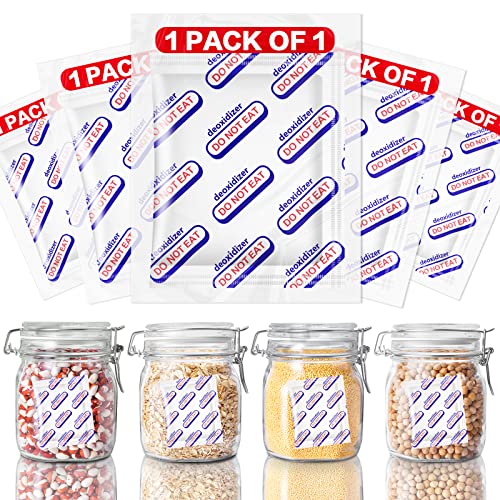
Some containers are simply too big for gallon-bag packets, and that is the gap the HomArtist 2000cc pack fills. Each packet carries a 2000cc rating, sized for five-gallon buckets and other large sealed bins where stacking four or five smaller packets would leave uneven coverage. The box holds 30 packets, each individually wrapped, so a bucket-sealing day uses only what it opens and the rest stay sealed for the next round. The listing describes the packets as food grade, fitted with an oxygen indicator, and intended for long-term storage and preservation in mylar bags, buckets and large jars. Individual wrapping matters more at this size, not less, because a wasted 2000cc packet costs several times the capacity of a wasted small one. Thirty packets is a sensible count for this class, since bucket jobs are occasional rather than weekly, and the box will not age out on the shelf the way a hundred-count of bucket-size packets might. If your archive lives in buckets and big bins rather than bags, this is the packet size to standardize on, and doubling a packet in a very full bucket is a reasonable safety margin.
How to choose
Start with container size, because the cc rating has to cover the air sealed inside, not the weight of the contents. A common maker guideline is roughly 300cc to 500cc per gallon of container volume, so quart bags take a 300cc packet, gallon bags take 400cc to 500cc, and five-gallon buckets take a 2000cc packet. When in doubt, size up, since extra capacity is harmless. Next, match the pack format to your pace: individually wrapped packets suit occasional jobs, sub-packs of five or ten suit batch days, and an oxygen indicator is worth having whenever packs may sit stored for months. Remember that absorbers only work inside a real barrier container, meaning a heat-sealed mylar bag, a gasketed bucket or a sealed jar, and they start working the moment they meet air, so seal promptly. Finally, keep the two storage problems separate: absorbers remove oxygen, not moisture, so damp-prone storage still needs desiccant or a dehumidifier alongside them.
Who should skip
Skip oxygen absorbers if your containers get opened regularly, because every opening refills the container with fresh air and spends the packet for nothing. Skip them if moisture is your only problem, since they do nothing about humidity and a desiccant pack or dry cabinet is the right tool there. Skip them, too, for short-term storage measured in weeks, where a plain sealed bin already does the job and the packets add cost without adding protection.
Frequently Asked Questions
How many oxygen absorbers do I need for a gallon mylar bag?
One 400cc or 500cc packet is the standard answer for a gallon bag, following the common guideline of 300cc to 500cc of capacity per gallon of air space. Bags packed very full hold less air and need less capacity, while loosely filled bags hold more. Adding a second packet does no harm, so when a bag looks airy, doubling up is the safe move.
Do oxygen absorbers remove moisture as well?
No. An oxygen absorber is an iron-powder packet that reacts with oxygen only, and it leaves the humidity inside a container unchanged. Moisture control is a separate job handled by silica gel and other desiccants, or by a dehumidifier for whole rooms. For long-term archive storage in damp spaces, use both: an absorber for the oxygen and a desiccant for the water vapor.
How long do oxygen absorbers take to work?
Most packets pull the oxygen in a sealed container down over the first day or so, with the bulk of the work done in the first hours after sealing. The container has to stay sealed for the level to stay low, which is why a proper heat seal on a mylar bag matters. An indicator tablet inside the container confirms the result, staying pink while oxygen remains low.
How should I store unused oxygen absorbers?
Keep them in their original vacuum-sealed sub-packs or individual wrappers, in a cool, dry drawer, until the moment a job needs them. Once a sub-pack is opened, any packets you do not use should be resealed in an airtight jar or a vacuum bag right away, because exposure to room air starts spending their capacity immediately. When in doubt, check the indicator before trusting an older opened pack.
Final verdict
Oxygen absorbers are a sizing exercise more than a brand contest. The PackFreshUSA 500cc box is the best default for gallon-bag archive work, thanks to its indicator sub-packs and printed guide. HomArtist covers both ends of the ladder, with individually wrapped 300cc packets for small jobs and 2000cc packets for buckets, while ZRLEI’s 400cc five-packs and BRENSTEN’s 500cc ten-packs serve batch sealers in between. Match the cc rating to your container, seal promptly, and handle moisture separately.
Product and ASIN Reference
| Product | ASIN |
|---|---|
| PackFreshUSA 500cc Oxygen Absorber Packs, 100 Pack | B072MRC3N4 |
| HomArtist 300cc Oxygen Absorbers, Individually Wrapped, 100 Pack | B0B6CHNJXG |
| ZRLEI 400cc Oxygen Absorbers, 100 Count | B09ZSRX97J |
| BRENSTEN 500cc Oxygen Absorbers, 100 Packets | B09PQVK8TD |
| HomArtist 2000cc Oxygen Absorbers, 30 Count | B0B6CFW5JV |
More from Amazon
Programs that pair well with the guide above. Offers and eligibility are set by Amazon and may change.
A free business account with business pricing and bulk-buying tools for work, shop or home office.
Create a business accountFree shipping on eligible items, Prime Video and more. Eligible new members can start with a free trial.
Start a Prime free trialAudiobooks and podcasts to listen to on the go. Eligible new members can start with a free trial.
Try Audible freeAd-free music streaming. Eligible new subscribers can start with a free trial.
Try Music Unlimited freeAs an Amazon Associate we earn from qualifying purchases.
Write Your Review
No reviews yet. Be the first to share your experience!