

Our Short List of 3
All 4 Picks at a Glance
| Product | Specs | Action |
|---|---|---|
 ASUS ROG Xbox Ally | Check price on Amazon | |
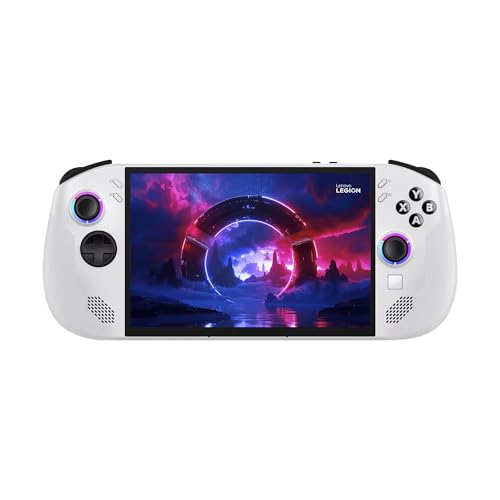 Lenovo Legion Go S (Windows, Ryzen Z2 Go, 32 GB) | Check price on Amazon | |
 MSI Claw A8 | Check price on Amazon | |
 MSI Claw 8 AI+ | Check price on Amazon |
Key takeaways
- Compare the best Windows gaming handhelds with expandable storage: replaceable NVMe SSD slots and microSD readers from ASUS, Lenovo and MSI, checked by hand.
As an Amazon Associate, we earn from qualifying purchases made through links on this page.
Modern PC game libraries grow fast. A single big release can take well over 100 GB, and a handheld that ships with a fixed drive fills up sooner than most buyers expect. That is why the storage question matters so much on a Windows gaming handheld: can you add room later, or are you stuck deleting and reinstalling games for the life of the device?
Every handheld in this roundup runs Windows 11 Home and gives you two separate ways to grow. Each one has a microSD card reader for quick, tool-free expansion, and each one uses a socketed M.2 NVMe SSD that can be swapped for a larger drive later. That second point is the real dividing line in this category. Some handhelds solder their storage or hide it behind a non-standard slot; the four machines below all use standard M.2 slots, so a capacity upgrade stays a routine parts swap rather than a new purchase.
The picks cover four distinct priorities: the newest Xbox-branded ASUS model, a Lenovo with a larger 8-inch screen and the most memory in this group, an MSI built on AMD’s Z2 Extreme chip, and an MSI built on Intel silicon with Thunderbolt 4 for docked play. All specifications below come from the manufacturers’ published spec sheets.
What to look for
Expansion path. Check both halves of the storage story. A microSD reader is the easy route: cards slide in without tools and work well for older titles, emulation libraries and overflow storage. A replaceable M.2 SSD is the bigger upgrade, because it raises the ceiling for your main library. Confirm the slot length before you plan a swap, since these machines use either M.2 2280 or shorter drives, and the wrong length simply will not fit.
Processor and graphics. Windows handhelds currently split between AMD Ryzen Z-series chips and Intel Core Ultra. The chip sets your frame-rate ceiling and also decides details such as whether you get Thunderbolt 4 or USB4 ports. Memory matters alongside it: 16 GB is the floor for comfortable Windows gaming, while 24 GB and 32 GB configurations leave more headroom for the system and background apps.
Display. Screen sizes here run from 7 to 8 inches. Look at resolution, refresh rate and variable refresh support, because a VRR panel smooths out the frame-rate dips that handheld hardware produces in demanding games. Brightness figures from the maker tell you how the panel copes away from a desk lamp.
Battery and weight. Battery capacity is quoted in watt-hours, and the bigger packs in this group reach 80 Wh. Weight runs from about 670 g to about 795 g, which your wrists will notice in long sessions. Neither figure tells the whole story on its own, but together they frame the portability trade-off each maker chose.
Ports. Dual USB-C ports let you charge and connect a dock or drive at the same time. Thunderbolt 4 and USB4 both carry display output and fast data, which matters if the handheld doubles as a small desktop.
ASUS ROG Xbox Ally
The ROG Xbox Ally is the ASUS and Xbox collaboration model in white, built around the AMD Ryzen Z2 A processor with four cores, eight threads and boost clocks up to 3.8 GHz, paired with integrated Radeon graphics. It carries 16 GB of LPDDR5X memory and a 512 GB PCIe 4.0 NVMe SSD. The display is a 7-inch 1920 x 1080 IPS touchscreen at 120 Hz with FreeSync Premium and 500 nits of brightness, protected by Gorilla Glass Victus. The battery is a 60 Wh pack, the machine weighs 670 g, and two USB-C ports handle charging and accessories.
Storage expansion is the strong suit here. The fitted SSD sits in a standard M.2 2280 slot, the most common NVMe size, so larger replacement drives are easy to source. A microSD card reader on the body adds the second route: slide a card in for extra room without opening the case. Between the two, this is the lightest machine in the roundup and the simplest to keep fed with new games.
Who it suits: buyers who want the lightest handheld in this group and an Xbox-style front end on top of ordinary Windows, with both expansion routes open.
Limitations to know: the 512 GB fitted drive is the smallest here, so heavy libraries reach the upgrade point sooner. The 16 GB of memory is the joint lowest in the group, and the Z2 A chip is a step below the Extreme-class processors in the other three picks.
Lenovo Legion Go S (Windows, Ryzen Z2 Go, 32 GB)
The Legion Go S in this configuration runs Windows 11 Home on the AMD Ryzen Z2 Go processor, with 32 GB of soldered LPDDR5X memory and a 1 TB SSD. Lenovo’s spec sheet gives it an 8-inch 1920 x 1200 IPS touchscreen with a 120 Hz refresh rate, variable refresh down to 48 Hz, and a touchpad built into the right controller. It weighs about 740 g, carries a 55.5 Wh battery, and provides two USB4 ports plus a headphone jack.
The expansion story has a useful quirk worth knowing before you buy a drive. Lenovo fits a short M.2 2242 SSD at the factory, but the slot itself is a full M.2 2280 PCIe 4.0 x4 slot, so a standard full-length drive fits when you upgrade. The microSD card reader sits on the body for tool-free additions. No other handheld in this roundup pairs this much memory with a 1 TB factory drive, which makes it the pick for buyers who would rather delay the SSD swap as long as possible.
Who it suits: players who want the bigger 8-inch screen, the most memory in this group and a full-length SSD slot waiting for a future upgrade.
Limitations to know: the 55.5 Wh battery is the smallest capacity here despite the larger body. The Z2 Go is a four-core chip aimed at efficiency rather than peak output, and the memory is soldered, so the 32 GB you buy is the 32 GB you keep.
MSI Claw A8
The Claw A8 is MSI’s AMD-based flagship handheld, built on the Ryzen Z2 Extreme processor with 24 GB of LPDDR5X memory and a 1 TB NVMe SSD in an M.2 2280 slot. The display is an 8-inch 1920 x 1200 touchscreen at 120 Hz with variable refresh support. An 80 Wh battery is fitted, the largest class of pack in this roundup, and the machine weighs about 765 g. Hall effect sticks and triggers are standard, and a USB4 port covers charging, data and display output.
For storage growth, the A8 follows the same two-route pattern as the rest of this group: the 2280 SSD can be replaced with a larger drive, and the microSD card reader adds space without tools. The 1 TB factory capacity means the swap can wait, while the card reader handles the overflow from day one. Buyers comparing it with the Intel Claw below should note the port difference: this model uses USB4 rather than Thunderbolt branding, though both carry 40 Gbps-class connections.
Who it suits: buyers who want AMD’s strongest current handheld chip, a big battery and an 8-inch panel, with both storage routes open.
Limitations to know: at about 765 g it is one of the heavier machines here. There is a single USB-C port class to share between charging and accessories, so docked setups lean on a hub, and the memory is not user-upgradeable.
MSI Claw 8 AI+
The Claw 8 AI+ is the Intel entry in this category. It runs the Core Ultra 7 258V processor with Arc 140V integrated graphics, 32 GB of LPDDR5X memory and a 1 TB NVMe SSD. The 8-inch 1920 x 1200 touchscreen runs at 120 Hz with variable refresh and 500 nits of brightness. MSI fits an 80 Wh battery, two Thunderbolt 4 ports and Wi-Fi 7, and the machine weighs 795 g, the heaviest in this roundup. Hall effect sticks and triggers are fitted, along with a fingerprint reader in the power button.
Storage expansion matches the group pattern: a replaceable M.2 2280 SSD plus a microSD card reader. Where this model separates itself is connectivity. Two Thunderbolt 4 ports make it the easiest handheld here to dock with an external GPU enclosure or a desktop monitor setup while still charging, so the storage conversation extends beyond the device itself to fast external drives on the desk.
Who it suits: buyers who plan to dock their handheld at a desk, want Thunderbolt 4 and the joint-highest memory in the group, and still want both internal expansion routes.
Limitations to know: it is the heaviest handheld in this roundup at 795 g. Intel’s Arc graphics rely on a different driver track than the AMD machines, and the memory is soldered to the board.
Comparison table
| Handheld | Processor | Memory | Fitted storage | Expansion | Display | Battery |
|---|---|---|---|---|---|---|
| ASUS ROG Xbox Ally | AMD Ryzen Z2 A | 16 GB LPDDR5X | 512 GB M.2 2280 SSD | Replaceable SSD, microSD reader | 7-inch 1080p, 120 Hz | 60 Wh |
| Lenovo Legion Go S | AMD Ryzen Z2 Go | 32 GB LPDDR5X | 1 TB M.2 2242 SSD | M.2 2280 slot, microSD reader | 8-inch 1200p, 120 Hz VRR | 55.5 Wh |
| MSI Claw A8 | AMD Ryzen Z2 Extreme | 24 GB LPDDR5X | 1 TB M.2 2280 SSD | Replaceable SSD, microSD reader | 8-inch 1200p, 120 Hz VRR | 80 Wh |
| MSI Claw 8 AI+ | Intel Core Ultra 7 258V | 32 GB LPDDR5X | 1 TB M.2 2280 SSD | Replaceable SSD, microSD reader | 8-inch 1200p, 120 Hz VRR | 80 Wh |
FAQ
Can games run from a microSD card on these handhelds?
Yes. Windows treats the card as another drive, so launchers such as Steam can keep a library folder on it. Loading is slower than the internal NVMe drive, so demanding new releases belong on the SSD and older or smaller titles fit the card well.
Does swapping the SSD void anything or need special tools?
The makers build these machines with socketed drives, and a swap uses ordinary small screwdrivers. You do need to reinstall Windows or clone the old drive, and opening any device should be done carefully. Check the maker’s support pages for your exact model before you begin.
Why is the Steam Deck not in this list?
It runs SteamOS, a Linux-based system, rather than Windows. This roundup only covers handhelds that ship with Windows, which is the group that runs every PC launcher and anti-cheat-protected title without workarounds.
How much storage is enough for a Windows gaming handheld?
Windows itself, launchers and updates take a visible share before any game is installed. A 512 GB drive holds a handful of large titles at once; 1 TB roughly doubles that working room. The expansion routes above matter because library sizes keep climbing either way.
Conclusion
Expandable storage is the feature that decides how long a Windows handheld stays convenient. All four machines here pair a microSD reader with a replaceable M.2 SSD, so none of them locks your library size at the factory. Choose the ROG Xbox Ally for the lightest body and the Xbox front end, the Legion Go S for its 8-inch screen and 32 GB of memory, the Claw A8 for AMD’s Z2 Extreme with an 80 Wh battery, or the Claw 8 AI+ if Thunderbolt 4 docking is part of your plan. Whichever you pick, confirm the exact configuration on the listing matches the spec sheet before ordering, since these product families sell in several memory and storage combinations.
More from Amazon
Programs that pair well with the guide above. Offers and eligibility are set by Amazon and may change.
A free business account with business pricing and bulk-buying tools for work, shop or home office.
Create a business accountFree shipping on eligible items, Prime Video and more. Eligible new members can start with a free trial.
Start a Prime free trialAudiobooks and podcasts to listen to on the go. Eligible new members can start with a free trial.
Try Audible freeAd-free music streaming. Eligible new subscribers can start with a free trial.
Try Music Unlimited freeAs an Amazon Associate we earn from qualifying purchases.

Write Your Review
No reviews yet. Be the first to share your experience!