

Key takeaways
- Compare the best dehumidifiers for garden sheds, from the large Waykar 80-pint to a cordless Eva-Dry, with cold-weather limits and drainage explained.
A shed is not a spare bedroom. It sits outside the heated envelope of the house, its walls are thin, its floor is often bare concrete or wood, and the temperature inside can swing from a warm afternoon to a freezing night. Tools rust, boxes soften, seed packets clump, and stored fabric picks up a musty smell that never quite leaves. The question is not whether a shed gets damp, but which machine can keep up — and which one gives up when the cold arrives.
This guide is for anyone keeping tools, garden gear, paint, or stored boxes in a shed that never quite dries out. It covers owners of large workshop sheds with power, owners of small garden sheds with a single outlet, and owners of sheds with no power at all. The five picks below were chosen from names and specifications printed on Amazon listings, and they span the whole range: a high-capacity compressor unit, two 50-pint machines, a compact 30-pint unit, and a cordless absorber.
Quick Picks
As an Amazon Associate we earn from qualifying purchases.
| Product | Best for | Key spec from title |
|---|---|---|
| Waykar 80-Pint Dehumidifier | Large workshop sheds | 80 pints per day, up to 5,000 sq ft |
| Frigidaire 50-Pint Dehumidifier FFAD5033W1 | Medium to large sheds, fewer empties | 50 pints per day, 16.9-pint bucket |
| TCL 50-Pint Smart Dehumidifier H50D24W | Cold sheds | 50 pints per day, works down to 41°F |
| hOmeLabs 30-Pint Dehumidifier HME020030N | Small garden sheds | 30 pints per day, up to 1,500 sq ft |
| Eva-Dry E-333 Wireless Mini Dehumidifier | Sheds with no power | Cordless silica gel, up to 333 cu ft |
How to Choose
Read the Pint Figure Honestly
A pint figure is a saturation number, measured at 95 degrees Fahrenheit and 90 percent relative humidity. The realistic figure, measured at 80 degrees and 60 percent humidity under the current AHAM and DOE test, is always lower, sometimes much lower. The Waykar in this guide headlines 80 pints but rates 62 under the realistic test, and the hOmeLabs 30-pint headlines 30 but rates about 22. Trust the realistic figure when you size a machine, because a shed in spring or autumn never sits at 95 degrees and 90 percent humidity. If a listing prints only the headline, treat the real pull as smaller than the number on the box.
Cold Is the Shed’s Real Test
A shed cools down at night and stays cool through winter, and that is where most dehumidifiers fail. Compressor coils ice up in cold air, the machine spends its time defrosting instead of drying, and below a certain temperature it may stop collecting water altogether. Only one pick in this guide prints a low-temperature limit in its own manual, the TCL, which is rated to operate down to 41 degrees. The Frigidaire listing prints no low-temperature limit at all, though retailer sheets quote a 41 to 95 degree range. Treat any limit you cannot find in the manual or the listing as unconfirmed, and never count on cold-room performance from a machine that prints none.
Tank, Hose, or Pump
A shed rarely has a floor drain, so the way water leaves the machine matters more here than in a house. A small tank fills fast in a damp shed and shuts the machine off until someone empties it, which means a shed you visit once a week can sit wet for six days. A gravity drain hose solves that, but only if the hose runs downhill to somewhere the water can go, and the TCL in this guide ships without a hose. A built-in pump pushes water uphill and out through a window or a wall vent, but pump versions are separate models in several families, including hOmeLabs and Midea, so confirm the exact listing before you buy.
Size the Machine to the Shed, Not the House
Dehumidifier coverage figures are written for heated rooms inside a house, and a shed breaks most of their assumptions. A shed leaks air through gaps around the door, its walls sweat when the temperature swings, and damp rises from a bare floor. A machine rated for 4,500 square feet will not dry a 4,500 square foot shed, and a shed that size rarely exists anyway. Match the machine to the shed’s volume and its dampness instead: a big workshop with power tools and stored timber needs a high-capacity compressor unit, a small garden shed needs a compact unit, and a shed with no power needs a cordless absorber or nothing at all.
The 5 Best Options
Waykar 80-Pint Dehumidifier

The Waykar is the heavy lifter of this guide, built for a large workshop shed where tools, timber, and stored boxes all need dry air at once. It headlines 80 pints a day at saturation and rates 62 under the realistic test, which is still the strongest pull here, and its coverage reaches up to 5,000 square feet on paper. A drain hose is included, so a shed with a downhill run to a soakaway or a drain can run for weeks without anyone emptying a tank. The 1.14-gallon tank is small for the class, so plan on the hose rather than the bucket.
Specs
- 80 pints per day headline, 62 pints per day under the realistic test
- Coverage up to 5,000 sq ft
- 1.14-gallon water tank
- Drain hose included, continuous drain option
- Auto defrost
- 42 dB noise level
- ENERGY STAR certified
Best for: A large workshop shed with power, tools, and timber to protect.
Watch out for: The listing prints no low-temperature limit, so do not count on cold-room performance; confirm the exact listing, as Waykar sells several similar 80-pint models.
Frigidaire 50-Pint Dehumidifier FFAD5033W1
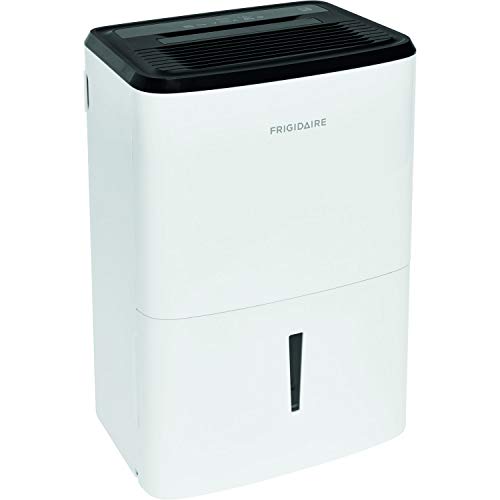
The Frigidaire is the steady workhorse pick, a 50-pint machine with a big bucket and three fan speeds that suits a medium to large shed with a power outlet. Its 16.9-pint bucket is the largest here, so it runs longer between empties than the compact picks, and the washable filter keeps dust from a shed floor out of the coils. The listing prints no low-temperature limit, though retailer sheets quote a 41 to 95 degree range, so treat cold-room performance as unconfirmed. The listing record was last crawled months ago, so confirm a current seller before ordering.
Specs
- 50 pints per day
- 16.9-pint water bucket
- Three fan speeds, 47, 49, and 51 dB
- 42.3 lb, 12.19 x 15.96 x 24.25 in
- Washable filter
- Continuous drain option
- Digital humidity readout, custom humidity control
Best for: A medium to large shed where a big bucket means fewer trips to empty it.
Watch out for: Retailer sheets print a 41 to 95 degree range but the listing itself prints no low-temperature limit; confirm the listing shows FFAD5033W1 and a current seller.
TCL 50-Pint Smart Dehumidifier H50D24W

The TCL is the only pick here with a low-temperature limit printed in its manual, which makes it the choice for a shed that gets cold. The manual says to place the unit in a space where the temperature will not fall below 41 degrees, and the coils are built not to freeze at that temperature with auto defrost. It removes up to 50 pints a day in spaces up to 4,500 square feet, with two fan speeds, a 24-hour timer, and app and voice control. The continuous drain port is there, but the hose is not included, so buy one if the shed has a downhill drain run.
Specs
- 50 pints per day
- Coverage up to 4,500 sq ft
- Low-temperature operation down to 41 degrees Fahrenheit
- Two fan speeds
- 24-hour timer, auto defrost
- Smart app and voice control, Alexa and Google Assistant
- Continuous drain port, drain hose not included
Best for: A cold shed, where a printed low-temperature limit matters more than raw capacity.
Watch out for: A second TCL 50-pint listing circulates under a different ASIN, so confirm the listing shows model H50D24W; the drain hose is not included.
hOmeLabs 30-Pint Dehumidifier HME020030N

The hOmeLabs 30-pint is the compact pick for a small garden shed, where a full-size machine would eat the floor space and cycle on and off all day. It headlines 30 pints a day and rates about 22 under the realistic test, which is enough for a single small shed, and it covers up to 1,500 square feet. The 0.8-gallon tank is small, so a shed you visit weekly needs the gravity drain hose rather than the bucket. This is an older listing, so confirm the exact model and a current seller, and note the pump version is a separate model.
Specs
- 30 pints per day headline, about 22 pints per day under the realistic DOE test
- Coverage up to 1,500 sq ft
- 0.8-gallon water tank
- Auto-defrost
- ENERGY STAR certified
- Humidity range 35 to 85 percent
Best for: A small garden shed where a full-size machine would be overkill.
Watch out for: An older hOmeLabs model, HME020031N, is listed as discontinued in some places, so confirm the listing shows HME020030N; the pump version is a separate model.
Eva-Dry E-333 Wireless Mini Dehumidifier

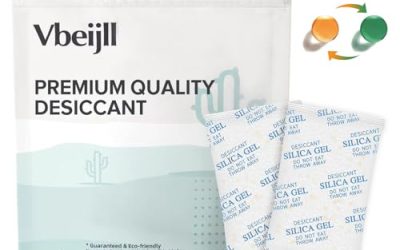
The Eva-Dry is the only pick here that needs no power at all while it works, which makes it the answer for a shed with no outlet. It is a cordless silica-gel absorber that pulls moisture from the air for 20 to 30 days before the crystals need renewing, and the colour-changing indicator shows when that time has come. It covers up to 333 cubic feet and holds up to 6 ounces of water, so it suits a small tool cupboard or a dry corner, not a damp workshop. One listing snapshot showed no featured offers, so confirm a current seller before ordering.
Specs
- Cordless silica-gel absorber, no power while absorbing
- Absorbs up to 4 to 6 oz of moisture
- Coverage up to 333 cu ft
- Colour-changing indicator crystals
- Plugs in to renew the silica gel
- 16 oz, 5-year warranty
- 0.38 pints per day in the listing data field
Best for: A shed with no power, or a small dry cupboard inside a larger shed.
Watch out for: It is not compared directly with the compressor picks on pints, and it absorbs slowly, so it is a storage pick, not a fix for a wet shed; confirm a current seller.
Which One Fits Your Situation
A Large Workshop Shed Full of Tools
Pick the Waykar 80-pint. It has the strongest realistic pull in this guide, 62 pints a day, and the included drain hose means it can run for weeks without anyone emptying a tank. Its 1.14-gallon tank is small for the class, so set up the hose run before you switch it on. If the workshop is unheated, remember the Waykar prints no low-temperature limit, so a cold snap may still slow it down.
A Small Garden Shed With One Outlet
Pick the hOmeLabs 30-pint. It is compact enough to leave floor space for tools and bikes, and its realistic pull of about 22 pints a day is enough for a single small shed. Use the gravity drain hose rather than the 0.8-gallon tank if you only visit weekly. Confirm the listing shows HME020030N, and remember the pump version is a separate model.
A Shed With No Power at All
Pick the Eva-Dry E-333. It draws no power while it absorbs, so it works in a shed with no outlet at all, and the colour-changing crystals tell you when to renew it. It only covers 333 cubic feet and holds 6 ounces, so use it in a small cupboard or a dry corner, not across a whole damp shed. For a large unpowered shed, there is no machine in this guide that will do the job.
A Cold Shed That Drops Near Freezing
Pick the TCL H50D24W. It is the only pick with a low-temperature limit printed in its own manual, rated to operate down to 41 degrees, with auto defrost to keep the coils clear. Buy a drain hose separately, since none is included, and keep 12 to 18 inches of clearance on all sides. Below 41 degrees even the TCL will struggle, so do not expect full performance from any machine in a freezing shed.
Common Mistakes
- Buying on the headline pint figure alone. The headline is measured at 95 degrees and 90 percent humidity, and the realistic figure is always lower, so size the machine on the realistic number or buy more capacity than the headline suggests.
- Expecting a dehumidifier to cool the shed. It does the opposite, adding a little heat while it runs, so a hot shed in summer needs ventilation or shade as well as a dehumidifier.
- Putting a compressor dehumidifier in a freezing shed and expecting full performance. Coils ice up in cold air, and any machine without a printed low-temperature limit is a gamble below about 40 degrees.
- Relying on a small tank in a shed you rarely visit. A full tank shuts the machine off, so a shed checked once a week needs a gravity drain hose or a pump model, not a bucket.
- Treating a cordless absorber like a compressor machine. The Eva-Dry holds 6 ounces and covers 333 cubic feet, so it protects a small cupboard, not a damp workshop.
Frequently Asked Questions
Can a dehumidifier keep a shed dry in winter?
Only partly. A compressor dehumidifier works best in warm air, and its coils ice up as the temperature falls, so a cold shed will collect less water than the figure promises. The TCL in this guide is rated to operate down to 41 degrees, but below that it will struggle. In a freezing shed, improve ventilation and seal gaps first, and treat the dehumidifier as a helper, not a cure.
Do I need a drain hose for a shed dehumidifier?
Yes, if you do not visit the shed often. A small tank fills fast in a damp shed and shuts the machine off until someone empties it. A gravity hose works only if it runs downhill to somewhere the water can go. The TCL in this guide ships without a hose, so check the box and buy one if your shed has a downhill run.
Why does the pint figure on the box not match real life?
The headline is a saturation number, measured at 95 degrees and 90 percent humidity, conditions a shed almost never reaches. The realistic figure, measured at 80 degrees and 60 percent humidity, is always lower. The Waykar here headlines 80 pints but rates 62, and the hOmeLabs headlines 30 but rates about 22. Size the machine on the realistic figure, and treat a listing that prints only the headline with suspicion.
Can I use a dehumidifier in a shed with no electricity?
Only a cordless absorber like the Eva-Dry E-333, which draws no power while it works and renews by plugging in elsewhere. It covers 333 cubic feet and holds 6 ounces, so it suits a small cupboard or a dry corner, not a whole damp shed. A compressor machine needs mains power, and running an extension lead to a shed is a job for a qualified electrician, not a DIY workaround.
More from Amazon
Programs that pair well with the guide above. Offers and eligibility are set by Amazon and may change.
A free business account with business pricing and bulk-buying tools for work, shop or home office.
Create a business accountFree shipping on eligible items, Prime Video and more. Eligible new members can start with a free trial.
Start a Prime free trialAudiobooks and podcasts to listen to on the go. Eligible new members can start with a free trial.
Try Audible freeAd-free music streaming. Eligible new subscribers can start with a free trial.
Try Music Unlimited freeAs an Amazon Associate we earn from qualifying purchases.

Write Your Review
No reviews yet. Be the first to share your experience!