

Our Top Picks
 KNKA 2500 Ft² Max 34 Pints Dehumidifier forMAX 34 Pints13.23 x 10.31 x 20.87 Inches17.6 PoundsCheck on Amazon
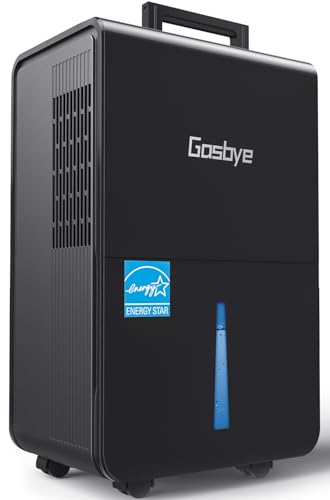 Gasbye 6000 Sq.Ft 2026 Energy Star Dehumidifier for4,500 Sq.Ft.11 x 15 x 24 inches43 poundsCheck on Amazon
 GoGuess 1600 Sq.Ft Compressor Dehumidifier for Basement1600 Sq. Ft7.2 x 13.2 x 17.1 inchesCheck on Amazon
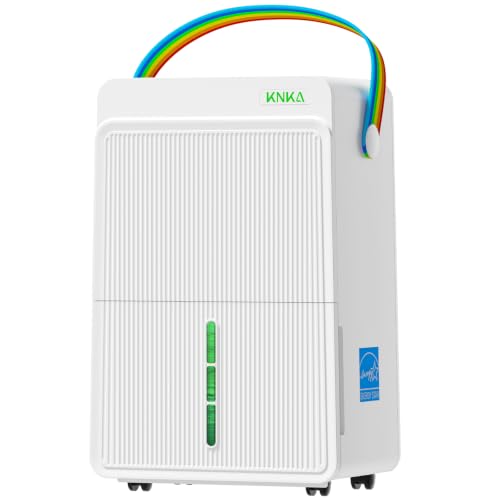 KNKA Energy Star 5000 Sq.Ft Dehumidifier for BasementMAX 74 Pints14.13 x 20.67 x 11.06 inches27.56 poundsCheck on Amazon
The best dehumidifier for a server room is usually the one your building’s HVAC already provides, and a portable unit is a stopgap you size small, drain continuously and watch with a separate hygrometer. If you do need a stopgap for a closet with no conditioned air, the DREO 4500 sq ft smart unit is the most balanced pick on paper, with a drain hose, automatic humidity control, a timer and a quiet claim of 41 dB, while the GoGuess 1600 sq ft model is the least oversized for a small space.
This page is organized as a pre-purchase checklist, not a ranking contest. Before any machine arrives, you need three numbers: what the room’s humidity actually does across a week, what band your equipment vendor and facilities team want, and how much water the room really generates. Then you pick a unit, plan where its water goes, and set a target that avoids both condensation and static. Eight candidates follow, all of them large household units, because that is what the market offers; each one is described using only what its listing title states.
Step zero: log the room before you buy anything

Waykar 80 Pints 5000 Sq. Ft 2025 Energy Star Dehumidifier for Basement | 90° Auto Swing, 30%–80% Humidity Control for home, Continuous drainage support, Whole-House Dehumidification, Auto-defrost


As an Amazon Associate we earn from qualifying purchases. Product prices and availability are accurate as of the date/time indicated.
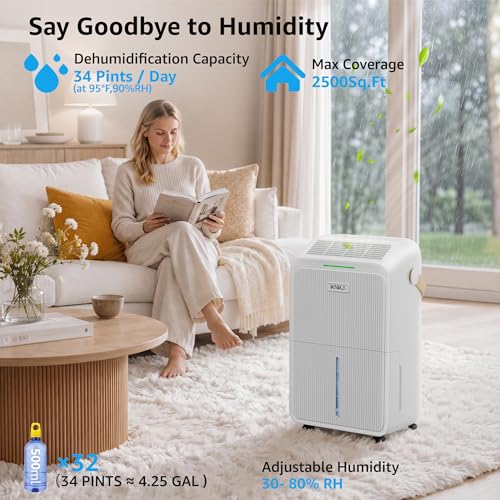
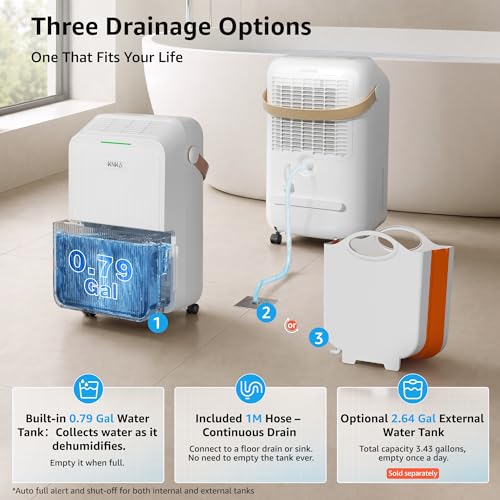
KNKA 2500 Ft² Max 34 Pints Dehumidifier for Basement with Drain Hose, White | Dehumidifiers for Home, Bedroom, Bathroom, Large Room, Three Modes, Intelligent Humidity Control, Dry Clothes, 24HR Timer



As an Amazon Associate we earn from qualifying purchases. Product prices and availability are accurate as of the date/time indicated.

DREO 4500 Sq Ft Smart Dehumidifier, 1.85 Gal Water Tank, Energy Star 2025 | Max 75 Pint Dehumidifier for Basement, Home & Large Room, Quiet 41dB, Drain Hose, Auto Humidity Control, 3 Fan Speeds,Timer


As an Amazon Associate we earn from qualifying purchases. Product prices and availability are accurate as of the date/time indicated.
Gasbye 6000 Sq.Ft 2026 Energy Star Dehumidifier for Basement Max 115Pints/D | Auto Shut-Off & Restart, 1.7 Gal Water Tank, 45dB Quiet Compressor, Thickened Copper Tubing, Black


As an Amazon Associate we earn from qualifying purchases. Product prices and availability are accurate as of the date/time indicated.
GoGuess 1600 Sq.Ft Compressor Dehumidifier for Basement, Max 21 Pint/Day | Dehumidifier with Drain Hose for Home RV Garage Large Room, Timer Humidity Control


As an Amazon Associate we earn from qualifying purchases. Product prices and availability are accurate as of the date/time indicated.
KNKA Energy Star 5000 Sq.Ft Dehumidifier for Basement, Max 74 Pint/Day | Dehumidifier with Drain Hose, Dehumidifiers for Home, Bedroom, Bathroom, Large Room, Smart Humidity Control, Sleep Mode


As an Amazon Associate we earn from qualifying purchases. Product prices and availability are accurate as of the date/time indicated.

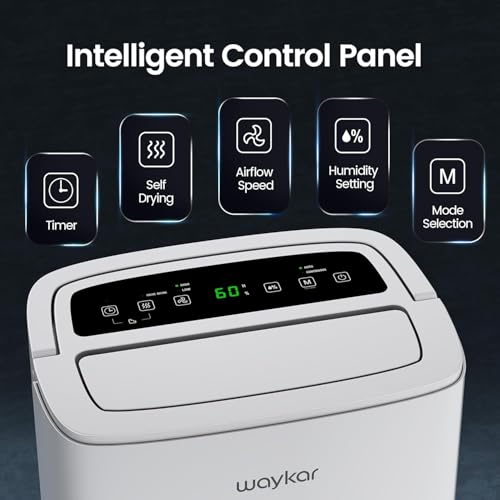
Waykar 80 Pints 2025 Energy Star Dehumidifier for Home up to 5,000 Sq. Ft, Ideal for Basement, Bathroom and Large Room with Drain Hose, Portable, Auto Defrost and Self-Drying




As an Amazon Associate we earn from qualifying purchases. Product prices and availability are accurate as of the date/time indicated.

Dehumidifier for Basement 4500 Sq.Ft with Drain Hose, Energy star | Intelligent Humidity Control, Auto Defrost Quilt Compressor Dehumidifiers for Home, Bedroom, Bathroom, Large Rooms,Office


As an Amazon Associate we earn from qualifying purchases. Product prices and availability are accurate as of the date/time indicated.
A logging hygrometer or a cheap pair of digital ones costs far less than any unit below. Place one at mid-rack height, near the equipment air intake, and another near the door. Record readings for at least seven days, including a weekend. Building air handlers often run on schedules, and many closet humidity problems turn out to be a Friday-night shutdown, a failed damper or a clogged coil rather than a missing dehumidifier. If readings climb only when the HVAC is off, the correct fix belongs to facilities, not to a plug-in appliance.
Write down three things: the highest reading, the lowest reading, and the time of day each occurred. If the highest value stays under about 60 percent and the lowest stays above about 40 percent, you do not have a dehumidification problem. If it exceeds 60 percent for hours at a time, you have a case to bring to facilities, and a portable unit as a bridge while they fix it.
The humidity band, and why too dry is also a problem
Commonly cited data-center guidance, including the ASHRAE environmental guidelines for data processing environments, recommends upper limits around 60 percent relative humidity and a lower limit tied to dew point rather than relative humidity alone. Many facility guides translate that into a working band of roughly 40 to 60 percent, with some preferring 45 to 55. Treat these as general figures: your vendor’s equipment specifications and your facilities staff set the real targets, and they may differ.
The reasoning is simple. High humidity can lead to condensation on cold surfaces and, over time, corrosion on connectors and boards. Low humidity increases the chance of static discharge, which can damage components or cause intermittent faults. A common rule of thumb flags readings below about 30 percent as the zone where static becomes noticeably easier to build up, though exact figures vary by source and by flooring and clothing. The practical point: a dehumidifier that overshoots into dry air trades one risk for another.
That is why the setpoint matters more than the capacity. Every unit here advertises some form of humidity control, but the control range and accuracy are listing details. One title, the Waykar 80-pint model, states a 30% to 80% humidity control range; for the others, check what range the controller offers and whether it holds a setting or only cycles on a timer. If the lowest setting is above your band, the unit will not dry the room enough; if it lets you set 30 percent, never use it.
The oversizing problem, worked through
Consider a 10 by 12 ft closet, which is 120 square feet, with an 8 ft ceiling. That is 960 cubic feet, or about 27 cubic meters of air. Warm air at 70 degrees F can hold about 18 grams of water per cubic meter when saturated, so the room’s air at 100 percent humidity holds roughly 490 grams of water. Moving from 65 percent to 50 percent removes about 15 percent of that figure, around 74 grams. (Rough physics estimates, not product measurements.)
Now compare with the ratings in the titles. The GoGuess lists 21 pints per day, about 10 liters. At its full rated pace, 74 grams would be removed in around 11 minutes. Real-world pace is lower, since ratings are normally quoted for warm, humid rooms, so call it 15 to 30 minutes. The 80-pint models are rated near 38 liters per day and the 115-pint Gasbye near 54. They would clear the same 74 grams in a few minutes, then sit idle, and the controller has to be accurate enough to stop in time.
Square-foot ratings tell a similar story. A closet of 120 sq ft against a 1600 sq ft unit is a factor of about 13; against a 5000 sq ft unit, a factor of more than 40. The practical implications are short cycling, humidity swings around the setpoint, and a higher chance of overshoot if the sensor sits in a warm or cold pocket. The advice: pick the smallest rated unit that offers continuous drainage and a setpoint you can verify. The large units here are justified only for a bigger room, such as a 400 sq ft equipment room or a basement where a server rack shares space with storage.
Where the water goes: condensate rules for equipment rooms
The biggest risk with a dehumidifier in a server room is not humidity. It is water. A compressor unit generates liquid condensate, and in a room full of power strips, switches and drives, a leak is expensive. Follow these rules, and ask facilities for their own policy because many organizations ban portable water-producing appliances in equipment rooms outright.
- Continuous drain only. Use a unit with a drain hose or continuous drainage and route it to a floor drain, sink or condensate pump. Do not rely on the tank unattended.
- Gravity or pump: a hose only works downhill. If the drain point is above the unit’s outlet, you need a condensate pump, and pumps fail; check the listing for compatibility.
- Drip tray and leak sensor. Put a shallow tray under the unit and a water-detection sensor in it. Wire its alert to something you actually watch.
- Keep it low and away. Place the unit on the floor, well away from racks, cable runs and power distribution. Never shelve it above equipment.
- Hose hygiene. Secure the hose with clips at both ends, avoid kinks, and keep it off cable pathways.
- Power: ask an electrician or facilities before plugging it into a UPS or a protected equipment circuit. Compressor units can draw a surge on start-up, and sharing a circuit with critical gear is something to avoid unless approved.
- Heat: the unit adds warmth, roughly its electrical draw in heat, to the room. See the cost and heat estimate below.
Eight candidates at a glance
| Model | Key spec from the listing | Price tier | Best for |
|---|---|---|---|
| DREO 4500 Sq Ft Smart | Max 75 pints, 1.85 gal tank, 41dB, drain hose, auto humidity control | Mid-range | Equipment room with a drain nearby |
| GoGuess 1600 Sq.Ft | Max 21 pints per day, drain hose, timer and humidity control | Mid-range | Small closet, least oversized |
| KNKA 2500 Ft2 | Max 34 pints, drain hose, three modes, 24HR timer | Mid-range | Mid-size room, moderate capacity |
| KNKA Energy Star 5000 Sq.Ft | Max 74 pints per day, drain hose, smart humidity control | Mid-range | Large storage or equipment room |
| Waykar 80 Pints 5000 Sq. Ft | 30%-80% humidity control, continuous drainage, auto-defrost | Premium | Wide setpoint range and swing airflow |
| Waykar 80 Pints (portable) | Up to 5,000 sq ft, drain hose, auto defrost and self-drying | Premium | Larger spaces needing portability |
| Gasbye 6000 Sq.Ft | Max 115 pints per day, 1.7 gal tank, 45dB, auto restart | Premium | Very large, damp basements |
| MIONJO 4500 Sq.Ft | Drain hose, intelligent humidity control, auto defrost | Premium | Office-adjacent large rooms |
Price tiers compare these units with one another. Operating temperature range, power draw and drain-hose length are not in the titles and need a listing check.
The candidates, one at a time
DREO 4500 Sq Ft Smart Dehumidifier, 1.85 gal tank, 41dB
The DREO title lists a 4500 sq ft rating, a 1.85-gallon tank (about 7 liters), Energy Star, a maximum of 75 pints per day, a 41 dB quiet claim, a drain hose, auto humidity control, three fan speeds and a timer. For a server-adjacent space, the combination of a drain hose, automatic humidity control and a timer is the closest match to what the checklist asks for. The large tank is a backup, not the plan: if the hose slips, the tank gives you hours of cushion before the unit stops, and the unit is more likely to stop than flood.
The 41 dB figure is the maker’s claim. For reference, commonly cited figures put a quiet office around 40 to 50 dB, so a unit near the quiet end of that range would be noticeable but not disruptive next to an equipment room. If the closet door opens into an occupied space, noise may matter; check how the claim was rated and whether the lowest fan speed reduces it.
It is far larger than a 120 sq ft closet needs, as the oversizing math shows. What that costs you is cycling behavior and some risk of dry overshoot, so set the target near 50 percent and watch a separate hygrometer. A 4500 sq ft rating is better suited to a 300 to 500 sq ft equipment room or basement IT space, where the extra capacity is used.
The three fan speeds give you a way to tune airflow, which matters because blowing exhaust directly across the rack front pushes warm, dry air where you may not want it. Point exhaust away from intakes.
Pros
- Drain hose plus automatic humidity control
- Timer and three fan speeds for tuning
- Quiet claim of 41 dB
Cons
- Oversized for a small closet
- Smart features add configuration to maintain
- Power draw not stated in the title
Who it’s for: a medium equipment or storage room with a drain point nearby and a person who will check a hygrometer regularly.
GoGuess 1600 Sq.Ft compressor dehumidifier, max 21 pints per day
This is the smallest unit by rating in the roundup, and for a closet that is the point. The title lists a 1600 sq ft rating, a compressor design, a maximum of 21 pints per day, a drain hose, a timer and humidity control, and says it is meant for homes, RVs, garages and large rooms. A compressor design in the title also tells you the technology type, which many titles omit.
In our 120 sq ft closet example, 21 pints per day is about 10 liters and clears the 74-gram swing in roughly 15 to 30 minutes of real-world operation (an estimate, not a measurement). That is still ample for a room whose moisture load comes from door openings. The risk then shifts to the control: with a unit this size you can reach a low humidity in a short time, so find out whether the controller holds a percentage or just counts down a timer.
The timer is a useful safety tool. If you plan a stopgap for a specific period, such as a weekend when the air handler is off, a scheduled run limits how long the machine can operate unattended. Pair it with a leak sensor and drip tray, and mark a calendar date for when you will check it. A stopgap that stays in place for a year becomes an unmanaged appliance.
Because the title mentions a drain hose, the plan would be to run the hose to a floor drain or pump. Check the listing for hose length and for whether the hose connects at the bottom of the unit.
Pros
- Least oversized for a small closet
- Compressor design stated in the title
- Drain hose and timer support unattended runs
Cons
- Lower capacity struggles if the room truly has a big leak or open-door humidity
- Control accuracy is not described in the title
- Noise figure not given
Who it’s for: a small network closet where a stopgap is needed and oversizing is the main concern.
KNKA 2500 Ft2 dehumidifier, max 34 pints, drain hose, 24HR timer
The KNKA 2500 sits between the small GoGuess and the large units. The title lists a 2500 sq ft rating, a maximum of 34 pints, a drain hose, three modes, intelligent humidity control, a clothes-drying function and a 24-hour timer, in white. The dry-clothes mode is irrelevant to a server room and a source of risk: it is meant for running the machine in a way that dries laundry, which may mean low humidity targets. Make sure you know how to select the humidity mode and lock out the others.
At 34 pints, roughly 16 liters a day on the maker’s rating, it has comfortable headroom for a mid-size room such as a 200 sq ft supply room that houses a rack. It also suits a closet that shares space with a humid utility such as a water heater, where the load is higher than a sealed computer closet.
White cases blend with walls and show dust, a minor advantage in a space where you want to notice a filter that needs cleaning. Dust matters in equipment rooms: a machine that draws room air through a filter will pick up fine particles, and a clogged filter increases run time. Check and clean it on a schedule, and keep paper and cardboard away from the intake.
The 24-hour timer is the feature to use. Set runs for the period you expect high humidity and let the unit stand down the rest of the day. Then review a week of hygrometer logs to confirm the schedule is doing what you want.
Pros
- Mid-size capacity with drain hose
- 24-hour timer for scheduled runs
- Mid-range tier
Cons
- Multiple modes, including laundry drying, add the chance of a wrong setting
- Still oversized for a tiny closet
- Noise and power draw not stated
Who it’s for: a mid-size supply or comms room with a modest humidity problem and a nearby drain.
KNKA Energy Star 5000 Sq.Ft dehumidifier, max 74 pints per day
This KNKA model lists a 5000 sq ft rating, Energy Star, a maximum of 74 pints per day, a drain hose, smart humidity control and a sleep mode. Its size is aimed at basements and large rooms, so in an IT context it belongs to a large storage room, a basement comms space or a small data room of several hundred square feet. For a 120 sq ft closet it is a 40-fold oversize; skip it.
Where it makes sense is a basement where a rack shares space with laundry and storage. The humidity load there is real, because basements pick up moisture from slabs and walls, and a large unit with a drain hose can keep the space inside a band. In that scenario, put the dehumidifier on the far side of the room from the rack, aim exhaust along a wall, and place a leak sensor at both the unit and the drain. The cold air near the floor of a basement can also reach the dew point on cold surfaces, so a hygrometer plus an infrared thermometer helps you spot cool metal surfaces where condensation starts.
The sleep mode is worth a note. It lowers display and fan activity at night, which may reduce the noise in an adjoining office. But it is the setpoint, not the sleep mode, that protects your equipment, so check the listing to find out whether sleep mode alters the humidity target.
Energy Star is a useful efficiency indicator for a unit that might run for months; confirm the certification details on the listing.
Pros
- High capacity for damp basement equipment spaces
- Drain hose and smart humidity control
- Energy Star in the title
Cons
- Far too large for a small closet
- Sleep mode behavior needs checking
- Power and noise not in the title
Who it’s for: a large basement or storage room shared with equipment, where moisture really is the main problem.
Waykar 80 Pints 5000 Sq. Ft dehumidifier with 30%-80% humidity control
The first Waykar listing is the one that states a humidity control range outright: 30% to 80%. It also lists a 90 degree auto swing, continuous drainage support, whole-house dehumidification, Energy Star and auto-defrost, with an 80-pint rating for spaces up to 5000 sq ft. For a server room the useful numbers are the range and the drainage. A 30% floor means the machine can hold a setpoint at 40 or 45 percent without hitting its limit, leaving some margin on both sides of the band.
The auto swing deserves a specific warning. It moves the louver to spread the airflow across a room, which is helpful in a basement but a poor idea near racks, since it can sweep warm, dry exhaust across equipment intakes. Check whether it can be locked in one position, and aim the output at a wall.
The 80-pint rating is roughly 38 liters per day on paper, and 5000 sq ft is the largest square-footage claim among the Waykar entries. Use it only for large spaces. In a small room, the setpoint would have to be reliable enough to stop the compressor cleanly, and you should verify that on a hygrometer log after the first week. Auto-defrost matters in cooler rooms, since coils can frost when the air is cold; check the listing for the lowest operating temperature.
Because this is a premium-tier model, the extra cost buys the wider stated control range and the drainage features. If your room is large and your facilities team allows portable units, that is what you are paying for.
Pros
- Clearly stated 30%-80% humidity control range
- Continuous drainage support
- Auto-defrost for cooler rooms
Cons
- Premium tier
- Auto swing can blow exhaust toward equipment
- Highly oversized for a closet
Who it’s for: a large equipment or storage room where a wide setpoint range and continuous drainage are priorities.
Waykar 80 Pints portable dehumidifier, up to 5,000 Sq. Ft, self-drying
The second Waykar entry shares the 80-pint, 5000 sq ft, Energy Star profile and adds a drain hose, portable build, auto defrost and self-drying. Self-drying is the feature worth discussing: after the compressor stops, the unit may run its fan to dry the interior and reduce musty odors and mold on internal surfaces. In a closed equipment room, a musty smell is unwelcome, and a unit that dries itself can reduce that risk. Check the listing for how the feature works and how long it runs.
The cost of that behavior is that the fan may run after the compressor cycles off, so the unit keeps moving air and adds some noise and a small amount of power draw. That is minor, but it affects how you read power and noise numbers: the compressor-off phase is not silent.
The portable label is helpful if the machine needs to move between rooms during a repair or a seasonal problem. A unit on casters can come out of the equipment room when it is not needed, instead of sitting there as an unmanaged appliance. Make that a habit: bring it in for a problem, log what happened, and take it out. A deliberately temporary setup is easier to defend to a facilities team than a permanent one.
Compared with the first Waykar, the title does not state a humidity control range, so verify what the controller offers. If the lowest setting is not clear from the listing, ask the seller or choose a model that states it.
Pros
- Drain hose with auto defrost and self-drying
- Portable, so it can leave the room when the problem is solved
- Energy Star in the title
Cons
- Premium tier and heavily oversized for a closet
- Humidity control range not stated in the title
- Self-drying fan adds run time
Who it’s for: teams who need to move a large unit in and out of a problem space and want an interior-drying feature.
Gasbye 6000 Sq.Ft dehumidifier, max 115 pints per day, 45dB
The Gasbye is the biggest unit here, with a 6000 sq ft rating, a maximum of 115 pints per day, Energy Star, auto shut-off and restart, a 1.7-gallon tank, a 45 dB compressor claim and thickened copper tubing. It is built for very large, very wet spaces. For a server room it is almost always the wrong tool, and it is included for completeness. In a 120 sq ft closet it would be a factor of 50 over the rating.
Notice what the title does not say: it does not mention a drain hose or continuous drainage. The tank is 1.7 gallons, about 6.4 liters, and the auto shut-off will stop the unit when the tank fills. In a server room that means no way to run unattended without checking the listing for a drain port, and an unattended tank-only unit is the arrangement the condensate rules rule out. Auto restart also deserves caution: after a power cut, the unit can start again on its own, which is convenient in a basement but something to coordinate with facilities in an equipment room.
If you do have a large damp room, such as a basement archive or a below-grade storage area holding backup media, the capacity is relevant. For that kind of space, keep media in sealed cases and consider off-site or offline copies on rugged drives; our guide to portable SSDs for backups covers durable options.
The 45 dB figure is the maker’s claim and is higher than the DREO’s, so noise would be more noticeable near occupied desks.
Pros
- Largest capacity in the list for very damp spaces
- Auto shut-off and restart
- Copper tubing noted in the title
Cons
- Drain option not stated in the title
- Extreme oversize for a closet
- Auto restart needs coordination in managed spaces
Who it’s for: a large, below-grade storage or archive space, not an active server closet.
MIONJO 4500 Sq.Ft dehumidifier with drain hose and intelligent humidity control
The MIONJO is the most expensive unit in the roundup and the only one whose title explicitly lists offices alongside bedrooms, bathrooms and large rooms. It lists a 4500 sq ft rating, a drain hose, Energy Star, intelligent humidity control and an auto defrost compressor. Its capacity in pints is not given in the title, so check the listing before comparing it with the others.
For an IT person, the mention of offices is the interesting part. It suggests the seller expects this unit to sit in occupied commercial spaces. That is not a guarantee about noise or build quality, and the title does not offer a decibel figure. If your equipment room opens onto an office, compare the noise claims of the DREO and Gasbye (41 and 45 dB) against what this listing offers.
The premium tier is hard to justify for a stopgap. With no stated capacity and no humidity range in the title, you would be paying for the brand and the intelligent control label, and you should read the manual before buying. The questions to ask the listing: what is the humidity setpoint range, does the control hold a target within a few percent, and does the drain hose connect to the bottom of the unit.
If your facilities team approves a permanent installation, a more suitable answer may be a ducted or integrated solution rather than a portable machine; this MIONJO fits the in-between case of a room with no better option.
Pros
- Drain hose and intelligent humidity control
- Listing mentions office use
- Auto defrost
Cons
- Highest price in the roundup
- Capacity and noise not stated in the title
- Large rating makes it oversized for closets
Who it’s for: a large office-adjacent equipment room where the buyer is prepared to check the listing details closely.
What it costs to run, and the heat it adds
None of the titles states wattage, so the estimate below rests on assumptions. Assume a compressor unit draws about 300 watts while running and runs 6 hours a day in a damp month. That is 1.8 kilowatt-hours a day, about 54 a month. At an assumed rate of 17 cents per kilowatt-hour, the monthly cost is about nine dollars. A large unit that draws more power may finish its work in fewer hours, and a unit cycling rarely in a well-controlled room costs less. (Assumptions, not measurements.)
The heat is the part many people forget. Almost all of the electricity a dehumidifier uses ends up as heat in the room, so 300 watts is roughly 1,000 BTU per hour added to the space, plus the heat released by condensation. In a closet with equipment, that adds to the cooling load. It is small next to a rack, but in an already warm closet it counts. Another reason to run the unit only as long as needed and to prefer the smallest model that works.
How we picked these
The Editorial team compared published specifications, manufacturer documentation and buyer reviews. Nobody on the team used or measured these units, and nothing here is a measured result. We limited product statements to what each title says: pint rating, square-foot rating, tank size, noise claim, and features such as a drain hose. Everything else, including operating temperature range, power draw, hose length and sensor accuracy, is flagged for a check on the listing.
Our criteria came from the server-room context. Drainage came first, because water is the main hazard. Next came the humidity control range and whether a setpoint is stated, then size relative to a typical closet, then noise for rooms that open onto occupied space. Buyer reviews were read for repeated complaints about humidity accuracy, leaks and noise instead of counting stars. Because every candidate is a household unit sold for basements and large rooms, we say clearly that none is designed or approved for data-center use.
Verdict
If you must add a portable unit, the DREO 4500 sq ft smart model is our top pick for a medium equipment room: drain hose, automatic humidity control, timer and a quiet claim. The budget-leaning pick for a small closet is the GoGuess 1600 sq ft unit, the least oversized with a drain hose and a timer. The premium pick for a large space is the Waykar 80-pint model that states a 30% to 80% control range. Whichever you choose, buy the hygrometer first, route the water to a drain, use a drip tray and leak sensor, and talk to facilities before the machine arrives.
Frequently asked questions
What humidity should a server room be kept at?
Commonly cited data-center guidance, such as the ASHRAE environmental guidelines, recommends staying below roughly 60 percent relative humidity with a lower limit set by dew point, and many facility guides translate that to a band of about 40 to 60 percent. Very dry air raises static-discharge risk and very humid air risks condensation and corrosion. Your equipment vendor’s specifications and your facilities team have the final say, so confirm both.
Do I need a dehumidifier in a server room at all?
Often not. Building HVAC or a dedicated computer-room air conditioner normally manages humidity, and a problem usually points to a schedule or maintenance issue, such as air handlers shutting off at night or on weekends. Log readings with a hygrometer for a week first and tell facilities what you find. A portable dehumidifier is a stopgap for a closet with no conditioned air, not a replacement for proper environmental control.
Is a portable dehumidifier safe near servers?
It can be if you manage the water. Use a unit with a drain hose or continuous drainage routed away from racks, set it on a drip tray, add a leak sensor, and keep it well below and away from equipment, cables and power strips. Avoid tank-only operation unattended, since an overflow or a hose slip can reach hardware. Ask facilities or an electrician before plugging it into any protected power circuit.
Can a dehumidifier make a server room too dry?
Yes, and that is the common mistake. Household units are rated for basements and large rooms, so in a small closet they can pull humidity down fast and keep going if the setpoint is low or missing. Dry air increases static-discharge risk, which is a threat to electronics. Choose a unit with a humidity setpoint, set it near the middle of your target band, and verify with a separate hygrometer.
How big a dehumidifier does a server closet need?
Smaller than the box suggests. A 10 by 12 ft closet with an 8 ft ceiling holds roughly 27 cubic meters of air, so even a modest unit has far more capacity than the room’s moisture load, which comes mainly from door openings and air leakage. Pick the smallest rating that still offers a drain hose and a reliable setpoint, then confirm it cycles off when the target is reached.

Write Your Review
No reviews yet. Be the first to share your experience!