

Our Top Picks
 UGREEN DXP4800 Plus 4-Bay NAS for FamiliesDXP4800 Plus,4-Bay (Diskless)10.14 x 7.01 x 7.01 Inches8.4 PoundsCheck on Amazon
For most households the best 2.5GbE NAS is a two-bay Intel-based unit with at least 4GB of memory, and the UGREEN DXP2800 stands out on paper because its title lists an Intel N100, 8GB of DDR5 and two M.2 slots alongside the 2.5GbE port. The wider list runs from a budget two-bay all the way to a four-bay with a 10GbE port. The comparison is built from the listing titles, manufacturer documentation and buyer reviews, and several titles omit the one detail this keyword is about, the network speed.
Top picks at a glance

UGREEN NAS DXP2800 2-Bay for Advanced Home Users, Remote Workers & Creators | Home Media & Data Center, Docker & VM, Plex, Fast File Transfer, Intel N100, 8GB DDR5, 2.5GbE, 2x M.2 NVMe, 4K HDMI(Diskless)


As an Amazon Associate we earn from qualifying purchases. Product prices and availability are accurate as of the date/time indicated.

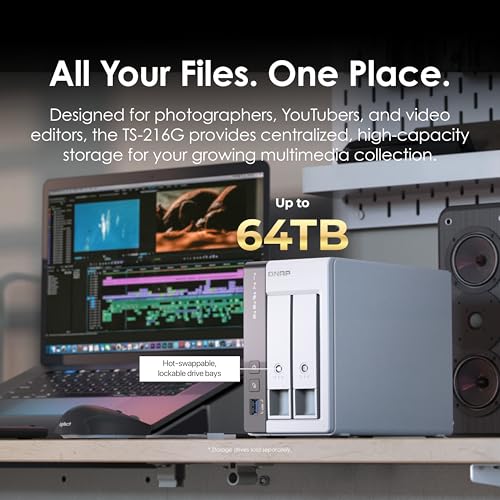
QNAP TS-216G-US 2-Bay 2.5GbE Desktop NAS | ARM Quad-Core CPU, Built-In NPU, 4GB RAM, Diskless



As an Amazon Associate we earn from qualifying purchases. Product prices and availability are accurate as of the date/time indicated.
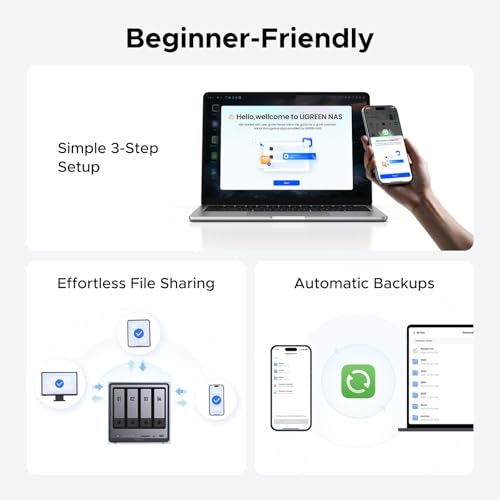
UGREEN DXP4800 Plus 4-Bay NAS for Families, Creators & Small Teams | 4K Home Media, File Server & Hardware Transcoding, Intel 8505, 8GB DDR5, 10GbE&2.5GbE, Built-in 128G SSD, 2xM.2 NVMe,Diskless





As an Amazon Associate we earn from qualifying purchases. Product prices and availability are accurate as of the date/time indicated.
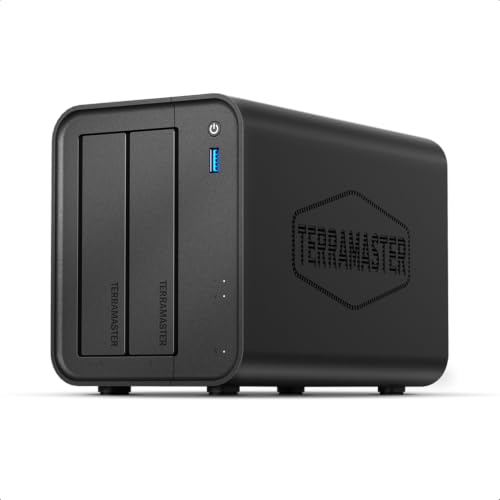
TERRAMASTER F2-425 2-Bay NAS Intel x86 Quad-Core CPU 4GB RAM (Diskless) | 2.5GbE LAN, Network Attached Storage Multimedia Server for Home Users (Diskless)


As an Amazon Associate we earn from qualifying purchases. Product prices and availability are accurate as of the date/time indicated.

QNAP TS-264-8G-US 2 Bay Desktop NAS | Intel Quad-core CPU burst up to 2.9 GHz with 8GB RAM


As an Amazon Associate we earn from qualifying purchases. Product prices and availability are accurate as of the date/time indicated.

UGREEN NAS DH2300 2-Bay for Beginners & Personal Users, Phone Backup | AI Album, Private Cloud/Remote Access, File Sharing, Multi-Device Backup, Home Entertainment, 4GB RAM on Board (Diskless)


As an Amazon Associate we earn from qualifying purchases. Product prices and availability are accurate as of the date/time indicated.

Asustor Drivestor 2 Gen 2 AS1202T 2 Bay NAS Storage for Personal Home Users | Photo File Backup, Remote Access, Mobile App, 4K Media Server, 2.5GbE, Personal Cloud, Network Attached Storage (Diskless)


As an Amazon Associate we earn from qualifying purchases. Product prices and availability are accurate as of the date/time indicated.

Yxk Zero1 2-Bay NAS for Pesonal & Home Storage, Photo Backup (Diskless) | Docker Support, Private Cloud & File Sharing, Remote Access, Phone Backup, 4GB RAM, 2.5GbE & 4K HDMI


As an Amazon Associate we earn from qualifying purchases. Product prices and availability are accurate as of the date/time indicated.

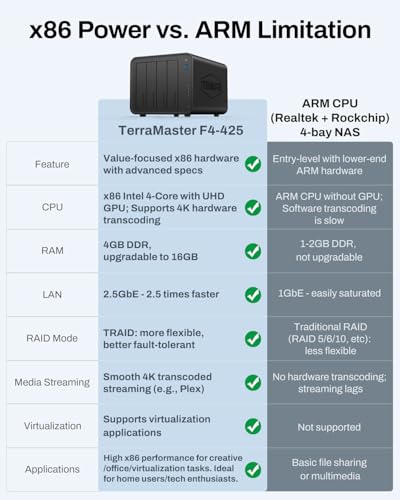
TERRAMASTER F4-425 4-Bay NAS Intel x86 Quad-Core CPU 4GB RAM (Diskless) | 2.5GbE LAN, Network Attached Storage Multimedia Server for Home Users (Diskless)






As an Amazon Associate we earn from qualifying purchases. Product prices and availability are accurate as of the date/time indicated.
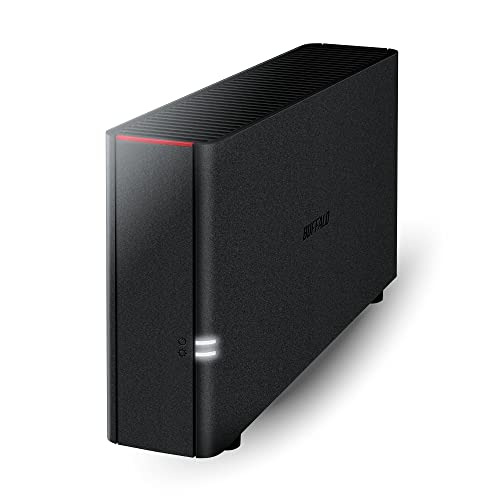
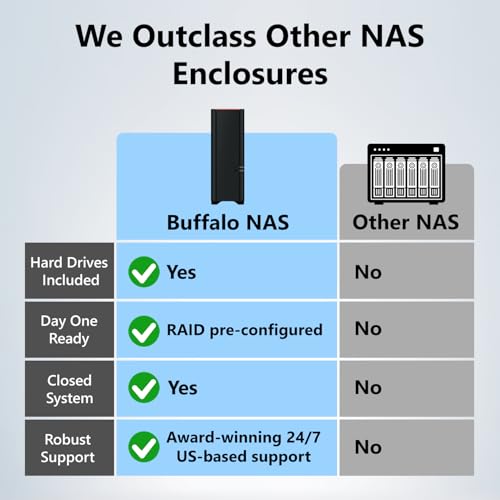
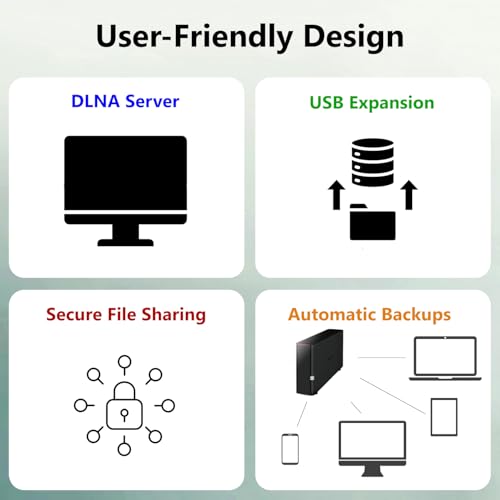
BUFFALO LinkStation 210 2TB 1-Bay NAS Network Attached Storage with HDD Hard Drives Included NAS Storage that Works as Home Cloud or Network Storage Device for Home




As an Amazon Associate we earn from qualifying purchases. Product prices and availability are accurate as of the date/time indicated.
| Model | Key point from the title | Price tier | Best for |
|---|---|---|---|
| UGREEN DXP2800 | 2-bay, Intel N100, 8GB DDR5, 2.5GbE, 2x M.2, HDMI | Mid | Home server with Docker and Plex |
| UGREEN DXP4800 Plus | 4-bay, Intel 8505, 8GB DDR5, 10GbE and 2.5GbE, 128G SSD | Premium | Growing families, creators |
| TERRAMASTER F2-425 | 2-bay, Intel x86 quad-core, 4GB, 2.5GbE | Budget to mid | Straightforward file and media sharing |
| TERRAMASTER F4-425 | 4-bay, Intel x86 quad-core, 4GB, 2.5GbE | Mid | More capacity at a moderate cost |
| QNAP TS-216G | 2-bay, 2.5GbE, ARM quad-core, built-in NPU, 4GB | Mid | Photo and backup focus |
| QNAP TS-264-8G | 2-bay, Intel quad-core up to 2.9GHz, 8GB, no network speed in title | Upper mid | Buyers who confirm the port first |
| Asustor Drivestor 2 Gen 2 | 2-bay, 2.5GbE, 4K media server, mobile app | Budget to mid | Personal backups, simple setup |
| UGREEN DH2300 | 2-bay, 4GB RAM, beginner focus, no network speed in title | Budget to mid | Phone backup, confirm the port |
| Yxk Zero1 | 2-bay, 2.5GbE, 4GB, 4K HDMI, Docker, typo in title | Budget | Tinkerers who accept a new brand |
| BUFFALO LinkStation 210 2TB | 1-bay, drive included, no 2.5GbE in title | Budget | Basic network storage, different class |
What 2.5GbE really changes
Gigabit Ethernet moves roughly 110MB/s in everyday use, which a single modern hard drive can already exceed. That is the case for 2.5GbE: it lifts the network ceiling to around 280MB/s, so a NAS with two hard drives or a pair of NVMe drives is no longer waiting on the cable. The faster port has become common on small home NAS units, which is why the keyword exists at all.
The catch is that a network link is only as fast as its slowest part. Your router, switch and computer all need 2.5GbE ports, or the connection settles at gigabit. Many routers still ship with gigabit LAN ports, so a small unmanaged 2.5GbE switch or a PC upgrade is often part of the real cost. Our router guide for NAS owners covers which port layouts matter.
It also matters what the NAS is for. A box that stores phone photos and a few documents will not feel faster at 2.5GbE. One that holds video projects, game libraries or a virtual machine disk will. Match the hardware to the heaviest thing you plan to do, not the average day.
How these ten were compared
Each listing was read for bay count, processor, memory, stated network ports, bundled storage and the intended audience. The basis is published specifications, manufacturer documentation and buyer reviews. Nobody on the team used or measured these units. Titles that leave out the network speed are marked “check the listing”, and one entry is a different class of product altogether, which is stated where it appears.
The listings, one by one
UGREEN NAS DXP2800 (2-bay)
The title lists an Intel N100, 8GB DDR5, 2.5GbE, two M.2 NVMe slots and 4K HDMI, sold diskless, aimed at remote workers and creators who run Docker, virtual machines or Plex. The 8GB of memory and the two NVMe slots are the headline hardware points, and the HDMI port hints at using it as a small media machine as well as a file server.
It suits someone who expects to grow beyond file storage and wants room to experiment. NVMe slots can usually serve as cache or a fast pool, but how they work depends on the maker’s software, so confirm that before buying drives. The title says diskless, which means you budget separately for two NAS-rated hard drives, and the HDMI output is a convenience feature whose software support (a desktop interface, media player or console-style output) should also be verified on the maker’s page. Heat and fan noise on a compact two-bay with an active processor are worth a look in buyer reviews.
- Pros: 8GB DDR5 as stated; two M.2 slots; 2.5GbE named; Intel processor suited to transcoding.
- Cons: Two hard drive bays only; priced above simpler 2-bays; newer software ecosystem than long-established brands.
Question to ask: can the M.2 slots be used as a storage pool or only as cache?
UGREEN DXP4800 Plus (4-bay)
This is the most capable unit in the set: four bays, an Intel 8505, 8GB DDR5, both 10GbE and 2.5GbE ports, a built-in 128G SSD and two M.2 NVMe slots. The 10GbE port only pays off if the rest of your network, including switch and PC, supports 10Gbps, which is not common in homes yet. The 2.5GbE port covers everyone else.
It fits a family archive, a small creative studio or anyone planning RAID 5 with four disks. The price tier is the highest here, so buy it for the extra bays and ports, not for headline gigabits you cannot use. The built-in 128G SSD in the title is presumably for the operating system or app storage, which keeps your data bays free, though the listing does not explain how it is used. With four bays plus two NVMe slots, planning matters: decide up front which drives form the main pool and which serve as cache so you do not have to rebuild later.
- Pros: Four bays; 10GbE plus 2.5GbE; built-in SSD for system use; 8GB DDR5.
- Cons: Highest price; larger footprint and power draw; 10GbE needs matching network gear.
Question to ask: do you actually own a 10GbE switch or adapter to use that port?
TERRAMASTER F2-425 (2-bay)
A two-bay unit with an Intel x86 quad-core processor, 4GB of RAM and 2.5GbE, sold diskless and aimed at home users and multimedia sharing. The title is short on detail, but the stated essentials, x86 processor and 2.5GbE port, answer the keyword directly without extra marketing.
It is a good fit for someone who wants shared folders, backups and media streaming on a modest budget. Memory is on the low side for running many containers, so treat this as a file and media box rather than a mini server. Since the title says Intel x86 without naming the chip, hardware video transcoding support is not confirmed here, and the listing is silent on USB ports and NVMe slots. Plenty of buyers choose this class of unit precisely because it is simple, and an uncluttered title can be a reasonable sign of a straightforward product.
- Pros: Clear 2.5GbE statement; Intel x86 CPU; one of the lower prices among the proper 2.5GbE two-bays.
- Cons: 4GB RAM only; no NVMe slots mentioned in the title; plain title with few feature claims.
Question to ask: is the 4GB of memory upgradeable on this model?
TERRAMASTER F4-425 (4-bay)
The F4-425 mirrors the F2-425 specifications, Intel x86 quad-core, 4GB, 2.5GbE, but in a four-bay chassis. The extra bays give you RAID 5 or RAID 10 options and a path to far more total storage, while the compute and network hardware stay identical to the smaller sibling.
It suits a household that has outgrown a two-bay or wants redundancy with more usable space. Four disks together can exceed a single 2.5GbE link in sequential reads, so the network port is the limiting factor for large files. That also means a single 2.5GbE port is a bottleneck when several people stream or copy at once. If you want to keep growing, check whether the model offers a second network port or link aggregation, since the title only mentions the one 2.5GbE connection and a matching switch would be required to combine links.
- Pros: Four bays at a moderate price; 2.5GbE stated; same easy-to-read title.
- Cons: 4GB memory for a larger array; no second network port in the title; bigger and louder with more drives.
Question to ask: do you need four bays now, or could two larger drives do the job for less?
QNAP TS-216G (2-bay)
The title names a two-bay desktop NAS with 2.5GbE, an ARM quad-core processor, a built-in NPU and 4GB of RAM. The NPU points to on-device features such as photo recognition, though what it does depends on the software, so check which functions the maker actually enables. ARM processors usually lack the video transcoding strength of Intel chips, so media-server use may be limited. The ARM design generally brings low power draw and quiet running, which counts for something in a living room or bedroom, but it also tends to mean a narrower selection of third-party apps than x86 hardware offers. A US-region model code in the title is a small plus for warranty handling in the States.
It suits users who mainly want backups, photo management and file sharing from a known NAS brand, and who do not plan to run heavy containers. Compared with Intel-based rivals at a similar price it gives up flexibility in exchange for efficiency.
- Pros: 2.5GbE stated; established NAS brand; NPU for photo-related features.
- Cons: ARM CPU; 4GB RAM; limited app and transcoding flexibility compared with Intel models.
Question to ask: which software features does the NPU actually accelerate?
QNAP TS-264-8G (2-bay)
This title names an Intel quad-core CPU bursting up to 2.9GHz with 8GB of RAM in a two-bay desktop case, and says nothing about the network port. Neither 2.5GbE nor gigabit appears in the text, so for this keyword the first job is checking the product page. If it does carry 2.5GbE, the hardware looks well balanced for a home server.
It will appeal to someone who wants Intel hardware and 8GB of memory from a long-established brand. It sits in the upper-middle price range, so you are paying for the brand and processor, which only matters if the port question resolves in your favor. The title says nothing about drive bays beyond two, memory upgradeability or the operating system, so the buyer reviews and maker documentation carry more weight than usual. Compared with the cheaper Intel units in this list, the main selling point is the 8GB of RAM, which gives a Docker-style workload more headroom.
- Pros: Intel CPU; 8GB RAM; established brand with a long software history.
- Cons: Network speed missing from the title; higher price than similar 2-bays; no storage details given.
Question to ask: how many LAN ports does it have, and at what speed?
Asustor Drivestor 2 Gen 2 (AS1202T)
The listing names the two-bay AS1202T for personal home use, with photo and file backup, remote access, a mobile app, a 4K media server, 2.5GbE and personal cloud features. It reads like a beginner-friendly appliance and the title includes the network speed up front, which is helpful. Processor and RAM details are not stated, so those need checking.
This is a fit for someone who wants easy setup and a mobile app rather than a configurable server. Without a stated processor or RAM figure, avoid assuming it can match the Intel N100 units for transcoding or containers. The 4K media server claim is also worth checking, since 4K playback depends on the client device, the file format and whether the NAS can transcode when the client cannot decode the file directly. The remote access features rely on the vendor’s cloud service, so read how that works if privacy matters to you.
- Pros: 2.5GbE stated; simple personal-cloud pitch; model number in the title.
- Cons: CPU and RAM not stated; entry-level positioning; fewer advanced features implied.
Question to ask: what processor and memory does the AS1202T have?
UGREEN NAS DH2300 (2-bay)
Aimed at beginners and personal users, the title highlights phone backup, an AI album, private cloud, remote access and 4GB of RAM on board. It does not mention 2.5GbE, so for this keyword it is a question mark, not a recommendation. If it turns out to have only a gigabit port, it does not belong in a 2.5GbE comparison.
Consider it for a home that mostly needs photo backup and does not need maximum copy speed. It is a gentler entry point than the DXP models, but the unanswered port question is a reason to check the maker’s page before comparing prices. The AI album mention suggests on-device photo sorting, but the title does not say how much processing power backs it, and the 4GB of memory is shared with everything else the system runs. For a household that wants to dump phone pictures automatically each night, those limits may never be noticeable, which is why this is still a reasonable thing to look into.
- Pros: Beginner-friendly feature set; lower price tier; 4GB of RAM stated.
- Cons: Network speed not stated; no processor named; fewer expansion options.
Question to ask: is the LAN port 2.5GbE or gigabit?
Yxk Zero1 (2-bay)
The title claims 2.5GbE, 4K HDMI, Docker support, 4GB of RAM, private cloud and phone backup at the lowest price in the group. It also misspells “Personal” as “Pesonal”, an early warning about listing care, and the brand has no long track record. Treat the specification list as unverified until the maker’s documentation confirms it.
It could suit an experimenter who wants a cheap 2.5GbE two-bay to learn on and who keeps good backups elsewhere. It is not the place to store the only copy of irreplaceable family photos. The title mentions Docker support and 4K HDMI but does not name the processor, so there is no way to judge whether it can handle either feature well. If you do buy it, install the latest firmware before loading data, test it with disposable files for a few weeks, and keep an independent backup elsewhere throughout.
- Pros: Lowest price; 2.5GbE and HDMI claimed; Docker mentioned.
- Cons: Typo in the title; unfamiliar brand with uncertain support; no processor named.
Question to ask: who provides firmware updates and warranty service?
BUFFALO LinkStation 210 2TB (1-bay)
This is a different product class: a single-bay NAS with a 2TB hard drive included, meant as simple home cloud or network storage. The title does not mention 2.5GbE, and a single-bay design offers no redundancy. It appears in this set because it is an inexpensive NAS, not because it answers a 2.5GbE search.
It fits someone who wants the cheapest way to share files across a home network and does not mind slower transfers. Anyone searching for a 2.5GbE unit should look elsewhere. Because the drive is included and matched to the unit, setup is simple, and there is nothing to choose, but the lack of a second bay means a failed disk takes the data with it unless you maintain another copy. Its inclusion in a 2.5GbE list shows how loosely search results categorise network storage.
- Pros: Drive included; low price; simple concept.
- Cons: One bay, no redundancy; no 2.5GbE in the title; limited scope for expansion.
Question to ask: is a single disk with no mirror acceptable for the data you plan to put on it?
Buying guide
Specs that matter for a 2.5GbE home NAS
| Spec concept | What to look for | Why it matters |
|---|---|---|
| Network ports | 2.5GbE stated for the LAN port | Sets the network speed ceiling |
| Processor | Intel x86 for transcoding and containers | ARM units suit simple file serving |
| Memory | 4GB minimum, 8GB for Docker or virtual machines | Low RAM limits apps |
| Bay count | Two for backups, four for RAID 5 | Decides capacity and redundancy |
| NVMe slots | Present, and usable as pool or cache | Helps small-file speed |
| Warranty and support | Clear term and firmware history | NAS units run for years |
Worked example: copying a 400GB photo and video archive
The speeds below are assumptions chosen to illustrate common situations, not measurements.
| Scenario | Assumed throughput | Time for 400GB |
|---|---|---|
| Gigabit network | 110MB/s | about 61 minutes |
| 2.5GbE, drives keep up | 280MB/s | about 24 minutes |
| 2.5GbE, one hard drive limiting | 180MB/s | about 37 minutes |
| Many small files over SMB | 40MB/s | about 2 hours 47 minutes |
The lesson is that 2.5GbE helps most with large files, and the disks, file sizes and protocol overhead can erase the gain on small ones. For a deeper look at drive choice, see our comparison of NAS drives for home use.
Capacity and RAID: what you actually get
RAID is not a backup, but it keeps a NAS running through one disk failure. Usable space depends on the level and the disk count, as the example below shows for 8TB drives.
| Layout | Drives | Usable space | Survives |
|---|---|---|---|
| RAID 1 (mirror) | 2 x 8TB | 8TB | 1 disk failure |
| RAID 0 (stripe) | 2 x 8TB | 16TB | No failures |
| RAID 5 | 4 x 8TB | 24TB | 1 disk failure |
| RAID 10 | 4 x 8TB | 16TB | 1 disk per mirror pair |
Our guide to two-bay NAS options and the one on NAS devices for 20TB drives cover capacity planning in more depth.
Deployment checklist
- Confirm the NAS LAN port speed on the maker’s page before ordering.
- Check that your router, switch and PC all support 2.5GbE.
- Buy NAS-rated drives and keep a second copy of anything irreplaceable.
- Use a short, intact Cat5e or Cat6 cable and confirm the link shows 2.5Gbps.
- Set up RAID before copying data and enable automatic updates.
- Run a test copy of a large file and a folder of small files to see the real difference.
Which one for which user
| User | Suggested listing | Reason |
|---|---|---|
| Home server with containers | UGREEN DXP2800 | 8GB DDR5, two M.2 slots |
| Large archive, RAID 5 | TERRAMASTER F4-425 or UGREEN DXP4800 Plus | Four bays |
| Simple file and media sharing | TERRAMASTER F2-425 | Clear 2.5GbE, x86 CPU |
| Photo backups from a known brand | QNAP TS-216G | 2.5GbE, NPU features |
| Cautious beginner | Asustor AS1202T | Simple personal cloud |
| Tight budget, willing to experiment | Yxk Zero1 | Cheapest, but unverified |
Mistakes buyers make
| Mistake | Fix |
|---|---|
| Assuming every NAS listing includes 2.5GbE | Read the port line on the maker’s page |
| Forgetting the switch and PC need 2.5GbE too | Check every device in the path |
| Treating RAID as a backup | Keep a separate copy offline or off-site |
| Buying desktop drives for 24/7 use | Use NAS-rated drives |
| Ignoring RAM for container use | Pick 8GB if running Docker apps |
| Trusting an unknown brand with the only copy | Verify support and firmware history first |
Verdict by use case
The UGREEN DXP2800 is the strongest all-round pick from the titles, the TERRAMASTER F2-425 is the straightforward budget-to-mid choice, and the DXP4800 Plus or F4-425 make sense when you need four bays. The QNAP TS-264 and UGREEN DH2300 are only worth considering once their network ports are confirmed. The Yxk Zero1 is a gamble on an unproven brand, and the Buffalo LinkStation is a different class of device that does not answer the keyword.
Frequently asked questions
Is 2.5GbE worth it over gigabit for a home NAS?
Often yes, but only if the rest of the chain keeps up. Gigabit tops out near 110MB/s in practice, while 2.5GbE can approach roughly 280MB/s. A single hard drive can already beat gigabit, so the upgrade helps even a one-disk copy, but your router, switch or PC network port must also run at 2.5Gbps. If either end is gigabit, the link falls back to gigabit speed.
Do I need Cat6 cable for 2.5GbE?
Not usually. 2.5GBASE-T is designed to run over standard Cat5e at the typical home distances, and Cat6 is a safe choice for new runs. What matters more is that the cable is intact, properly terminated and not a flat cheap patch lead. If a link negotiates at 1Gbps on a new cable, try a different cable before blaming the NAS or switch.
Can two hard drives in a 2-bay NAS saturate 2.5GbE?
Sometimes, in sequential reads. A modern hard drive can sustain very roughly 150 to 250MB/s on large files, and a mirror may read from both disks, so a 2-bay setup can come close to the ceiling for big files. Small files, many parallel users and network-share overhead drop real speeds well below that. Adding an NVMe cache or pool helps where the model supports it.
Why do some of these listings not mention 2.5GbE at all?
Sellers write titles for search, not specifications. Three of the ten listings reviewed here, the QNAP TS-264, the UGREEN DH2300 and the Buffalo LinkStation 210, do not state a 2.5GbE port in their titles. That does not prove they lack one, but you must confirm the port count and speed on the manufacturer’s page before buying, because a gigabit-only unit would miss the point of this guide.
Should I choose a 2-bay or a 4-bay NAS for a home?
Two bays suit phone and laptop backups, photo libraries and light media streaming, and they cost less and use less power. Four bays offer more capacity, more RAID options and room to grow, but cost more and take more desk space. If you expect to need more than about 16TB of usable space within a few years, or want RAID 5, plan for four bays from the start.
More from Amazon
Programs that pair well with the guide above. Offers and eligibility are set by Amazon and may change.
A free business account with business pricing and bulk-buying tools for work, shop or home office.
Create a business accountFree shipping on eligible items, Prime Video and more. Eligible new members can start with a free trial.
Start a Prime free trialAudiobooks and podcasts to listen to on the go. Eligible new members can start with a free trial.
Try Audible freeAd-free music streaming. Eligible new subscribers can start with a free trial.
Try Music Unlimited freeAs an Amazon Associate we earn from qualifying purchases.






Write Your Review
No reviews yet. Be the first to share your experience!