

Key takeaways
- Open a new camera box, a lens case, or a package of replacement parts and a tiny paper sachet usually falls out with a warning not to eat it.
Open a new camera box, a lens case, or a package of replacement parts and a tiny paper sachet usually falls out with a warning not to eat it. That sachet is silica gel, and buying it by the hundred for your own gear is cheap, but the listings are confusing. Packets range from 2 grams to 50 grams, come in counts from fifteen to a hundred, and may or may not change color or be reusable. The question behind the keyword is which packet size and count actually fits the gear on your shelf.
This guide is for people who store cameras and lenses, spare drives, game cartridges, 3D printer filament, audio gear, or small electronics in cases and bins, planning ahead for 2026. It compares seven packet options strictly from product titles: gram weight, pack count, transparent versus color-indicating beads, and rechargeable wording. Silica gel does its work only in a closed space, so every pick assumes an airtight case, bag, or box. Packets are not food, and they should be kept away from children and pets.
Quick Picks
Our top picks



As an Amazon Associate we earn from qualifying purchases at no extra cost to you.
| Product | Best for | Key spec from the title |
|---|---|---|
| 15 Pcs 20 Gram Transparent Packs | Medium cases and shoe-box bins | 20 g each, 15 packs, transparent desiccant |
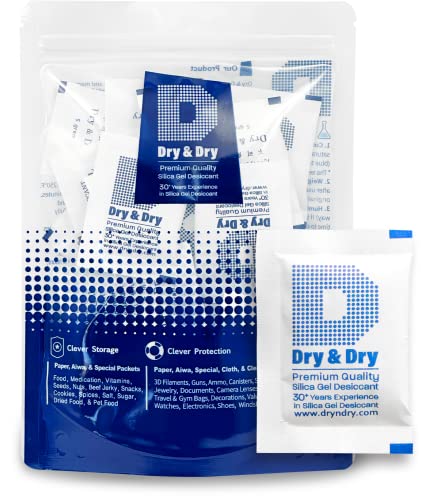
| Dry & Dry 5 Gram, 50 Packets | Camera bags and small pouches | 5 g each, 50 packets, rechargeable |
| Sukh 2 Gram, 100 Pieces | Tiny enclosures and jewelry-size boxes | 2 g each, 100 pieces, reusable |
| Absorbking 50 Gram, 25 Packs | Large bins and storage totes | 50 g each, 25 packs, reusable |
| 20PCS 10g Silica Gel Packets | Filament, shoes, and electronics | 10 g each, 20 pieces |
| VOISEN 20 Gram, 100 Pcs | Bulk storage with visible indicators | 20 g each, 100 packs, color-indicating |
| 100PCS 5 Gram Transparent Packs | Stocking many small spaces | 5 g each, 100 pieces, rechargeable |
How to Choose
Pick the packet weight for the space
Think in terms of container size. A 2 gram packet is meant for a jewelry-size box, a SIM card tray, or a small lens cap pouch. A 5 gram packet suits a camera bag compartment or a small electronics case. A 10 to 20 gram packet is a better match for a shoe-box bin, a handheld console case, or a tub of 3D printer filament. The 50 gram class belongs in a large plastic tote. A loose rule says larger volumes need more total grams, so for a bin that is opened often, double up and replace on a schedule.
Transparent beads or color-indicating beads
Transparent packets look plain and give no hint about saturation. Color-indicating packets, such as the VOISEN, shift shade when full, which is a real benefit for anything stored long term. Without an indicator, replace or recharge packets on a fixed calendar. Some listings describe the beads as rechargeable, meaning they can be dried in an oven according to the manufacturer instructions and reused, so confirm the temperature and time on the listing before heating. Never heat a packet in a way the maker does not describe.
Count versus total grams
A bigger pack count is not automatically better value. A hundred 2 gram packets contain the same total weight as twenty 10 gram packets, but they are far harder to place evenly in a large bin. For small enclosures, many tiny packets spread moisture control across the space. For big containers, fewer larger packets mean less handling and fewer chances to leave one behind when recharging. Do the arithmetic: pack count multiplied by grams per packet gives the total, which is the number to compare across listings.
Safety, cover quality, and budget corner-cutting
The packet cover matters because torn sachets release loose beads into a camera body or a drive case. Look for sturdy, breathable covers and inspect packets on arrival. Ignore claims of “premium” or “food grade” when picking for electronics, since those words do not say anything about how well a packet performs near gear. Keep packets from touching exposed circuit boards, and never put them in direct contact with a lens surface. As routine, store spare packets in an airtight jar, because a packet left in open air saturates before it ever reaches the shelf. Low-cost packs often cut corners on cover durability and on honest weight labeling.
Gear type changes the plan too. Camera bodies and lenses live in bags that are opened daily, so a dry cabinet or sealed pouch with a few small packets works better than a loose drop into a bag that never seals. Spare drives, cables, and memory cards sit still for months and respond well to a sealed bin with a moderate number of mid-size packets. Filament and game cartridges are often stored for years, so a color indicator or a written replacement date is worth the extra attention. Before sealing anything, let the gear reach room temperature, because a cold device brought into a warm room collects condensation that no packet can undo.
The 7 Best Options
15 Pcs 20 Gram Transparent Silica Gel Packs
This pack is for medium-size spaces. The title lists fifteen 20 gram transparent desiccant packets for storage, spices, jewelry, shoes, boxes, and electronics. At 20 grams each, one packet can serve a shoe-box-size bin.
- Strength: 20 grams per packet gives solid capacity for a mid-size case.
- Strength: fifteen packs are enough for several containers.
- Trade-off: transparent beads give no visible saturation cue.
Skip it if you need tiny packets for small pouches. It also makes sense to place one packet per shelf box rather than one per room, since the 20 gram weight is sized for an enclosed bin and not for open air.
Dry & Dry 5 Gram Silica Gel Packets, 50 Count
Dry & Dry is a classic small-packet choice. The title lists fifty 5 gram packets, described as rechargeable moisture absorbers for food storage, electronics, and other uses. The 5 gram size slides into camera bags and pouches.
- Strength: rechargeable is named in the title.
- Strength: fifty packets stock many small spaces.
- Trade-off: 5 grams has limited capacity, so large bins need many packets.
Skip it if the container is a large tote. In a camera bag, one or two of these per compartment is the typical pattern, and the packets can be gathered into a jar for recharging every few months when the routine calls for it.
Sukh 2 Gram Silica Gel Packets, 100 Pieces
Sukh offers the smallest sachets here. The title lists one hundred 2 gram reusable desiccant packs for storage, closet, clothes, shoes, car, jewelry, and 3D printer filament. They fit in very small enclosures.
- Strength: tiny packets slip into small boxes and pouches.
- Strength: 100 pieces give plenty to spread around.
- Trade-off: low capacity per packet means more packets for bigger spaces.
Skip it if your containers are roomy. Typical uses are earbud cases, small adapter boxes, memory card holders, and watch boxes, where a larger packet would not fit and a single tiny sachet tucked into a corner does the job.
Absorbking 50 Gram Silica Gel Packets, 25 Packs
Absorbking handles larger spaces. The title lists twenty-five 50 gram food safe, reusable packets for foods, storage bins, and similar uses. A single packet can serve a larger tote.
- Strength: 50 grams per packet is the highest capacity in this group.
- Strength: reusable is stated in the title.
- Trade-off: the size is clumsy for camera bags and small cases.
Skip it if your gear lives in small pouches. For a tote, place the packets spread across the layers instead of piling them in one corner, and keep the lid gasket clean so the seal holds.
20PCS 10g Silica Gel Packets
This is a mid-size convenience pack. The title lists twenty 10 gram packets for storage, clothes, shoes, electronics, 3D printer filament, jewelry, spices, and safes. The 10 gram size covers handheld consoles, filament boxes, and mid-size cases.
- Strength: 10 grams is a flexible middle size.
- Strength: electronics and filament are named uses.
- Trade-off: the brand is not shown in the title, so verify seller details.
Skip it if you need a named brand or color indication.
VOISEN 20 Gram Color-Indicating Silica Gel, 100 Pcs
VOISEN is the bulk, visible-indicator choice. The title lists one hundred 20 gram color-indicating silica gel packets described as premium, food grade desiccant for storage. The color change tells you when a packet is spent.
- Strength: color-indicating beads remove the guesswork.
- Strength: 20 grams times 100 packets provides a lot of total capacity.
- Trade-off: it is a large quantity, which only makes sense for multiple containers.
Skip it if you have one or two cases to protect.
100PCS 5 Gram Transparent Silica Gel Packs
This is a high-count small-packet pack. The title lists one hundred 5 gram premium silica gel packets described as rechargeable, transparent, moisture absorbers and humidity dry bags. It suits users with many small cases.
- Strength: a hundred 5 gram packets cover a lot of small containers.
- Strength: rechargeable and transparent are in the title.
- Trade-off: no color indicator is mentioned.
Skip it if you want visible indication of saturation.
Which One Fits Your Situation
A camera bag with lenses and bodies
Use Dry & Dry 5 Gram packets, one or two per compartment, kept clear of lens glass. Replace on a schedule.
A tote of boxed consoles or drives
The Absorbking 50 Gram packs fit large totes, and VOISEN 20 Gram packs add visible indicators.
A tub of 3D printer filament
The 20PCS 10g pack or the 15 Pcs 20 Gram pack matches a filament tub. Seal the lid and place the packet beside the spool.
Lots of small enclosures
Sukh 2 Gram or the 100PCS 5 Gram pack spreads moisture control across many small boxes.
Common Mistakes
- Using packets in an unsealed container, where they saturate quickly.
- Choosing by count instead of total grams.
- Letting packets rest on circuit boards or lens surfaces.
- Forgetting replacement dates when the beads are not color-indicating.
- Leaving packets where children or pets can reach them.
Related guides
- How Much Ssd Storage Do I Need For Gaming
- Why Does My Hard Drive Show Less Capacity
- Nvme Vs Sata M2 Enclosure Compatibility
Frequently Asked Questions
How many grams per cubic foot?
A common rule of thumb is about one unit of desiccant per cubic foot, with manufacturers often giving their own guidance. When in doubt, use more and monitor with a hygrometer.
Can silica gel packets be reused?
Packs described as rechargeable can be dried following the maker instructions. Others are best replaced.
Is silica gel safe around electronics?
Packets are commonly used in electronics packaging, but covers must be intact and packets should not touch exposed contacts. Follow the device manual, keep the cover intact, and do not use a packet that has torn or leaked beads inside a case.
How often should packets be replaced?
It depends on how often the container opens and the room humidity. Color-indicating packets show the answer, while others follow a calendar schedule. A reasonable habit is to check every packet whenever the container is opened, and to write the swap date on the lid so the next check is not left to memory.
More from Amazon
Programs that pair well with the guide above. Offers and eligibility are set by Amazon and may change.
A free business account with business pricing and bulk-buying tools for work, shop or home office.
Create a business accountFree shipping on eligible items, Prime Video and more. Eligible new members can start with a free trial.
Start a Prime free trialAudiobooks and podcasts to listen to on the go. Eligible new members can start with a free trial.
Try Audible freeAd-free music streaming. Eligible new subscribers can start with a free trial.
Try Music Unlimited freeAs an Amazon Associate we earn from qualifying purchases.

Write Your Review
No reviews yet. Be the first to share your experience!