

Key takeaways
- A storage room collects the things people do not want to lose: boxed hard drives, backup media, spare cables, archived paperwork.
A storage room collects the things people do not want to lose: boxed hard drives, backup media, spare cables, archived paperwork, and the odd stack of cameras and laptops waiting for a second life. It also tends to be the dampest room in the building, a basement corner or a windowless closet with no airflow. The decision behind this keyword is how much moisture-removal capacity the room needs, and whether a plug-in machine, a rechargeable desiccant, or a simple absorber box is the right tool for its size.
This guide is for people managing a basement storage area, a garage shelving zone, a spare-room archive, or a small commercial stockroom heading into 2026. It compares seven options strictly from product titles: stated coverage in square feet, pint-per-day capacity, drain features, tank size, and the type of moisture control. Humidity numbers on a label are usually measured under specific lab conditions, so real-world results in a cool, damp room vary, and the listing should be read for details the title omits.
Quick Picks
Our top picks




As an Amazon Associate we earn from qualifying purchases at no extra cost to you.
| Product | Best for | Key spec from the title |
|---|---|---|
| Uhome 150 Pint with Pump | Very large basements and storage halls | 150 pints, 7000 sq ft, pump, 1.85 gallon tank |
| Waykar 150 Pint Energy Star | Warehouses and industrial rooms | 150 pints, up to 7,000 sq ft, Energy Star |
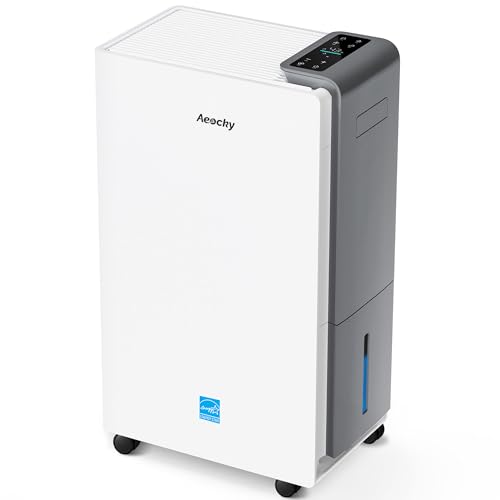
| AEOCKY 80 Pint Energy Star | Large finished basements | 5500 sq ft, 80 pints per day, drain hose |
| GoGuess 34 Pint Compressor | Mid-size storage rooms and garages | 2500 sq ft, 34 pints, drain hose |
| SEMKAP 32 Pint | Basements up to mid size | 2500 sq ft, 32 pints, drain hose |
| wisedry Rechargeable Silica Gel | Closets, safes, and small cabinets | 2 x 500 gram, microwave reactivated |
| NookHero Moisture Absorber Boxes | Tiny closets and drawers | 3 pack, 10.5 oz boxes |
How to Choose
Size the machine to the room, then go one step up
Manufacturers publish coverage in square feet and removal in pints per day. A storage room that feels damp but not wet usually does well with a unit rated for the room area or a bit more, and a room that has visible dampness or a musty smell calls for the next size up. Treat the larger coverage figures as upper limits for open spaces with the door closed. Rooms with many boxes and tall shelves block airflow, so a unit rated for 2500 square feet is a sensible match for a room of perhaps half that size, rather than a room at the limit. Oversizing slightly is cheaper than running an undersized unit nonstop.
Drainage decides how much attention it needs
A removable tank is fine for a closet but becomes a chore in a basement because a compressor unit can fill a tank in a day. Titles that mention a drain hose or a pump are describing continuous operation: gravity hoses need a floor drain or sink lower than the unit, while a pump, as on the Uhome, moves water upward or across the room. Check the tank size too, since a larger tank means fewer shutoffs when the hose is not used. For a room that nobody visits daily, continuous drainage is almost always worth planning for.
Know the difference between machines and desiccants
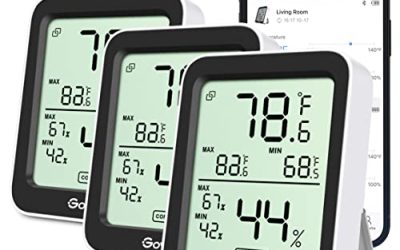
Compressor dehumidifiers draw moisture through coils and suit rooms of 100 square feet and up. Silica gel and absorber boxes are passive, work well in sealed spaces such as a gun safe, a cabinet, or a gear closet, and have a finite capacity that must be reactivated or replaced. Passive options are not a substitute for a machine in an open basement. For a data or media archive, combine them: a machine for the room, and desiccant inside sealed bins for the items that matter most. A small hygrometer is the only way to confirm the result, because humidity cannot be judged by feel.
Noise, energy, and where budget models cut corners
Energy Star wording in a title, as on the AEOCKY and Waykar units, signals a model listed as meeting that program’s efficiency criteria, which the listing should document. Compressor units are not silent, so storage rooms are better than bedrooms for them. Budget models often save money on the build of the tank, the quality of the drain connection, and the life of the humidistat. Ignore vague words such as “smart” or “powerful,” and instead compare coverage, pints per day, tank size, and drain options. Keep all machines clear of walls and stored boxes so air can circulate, plug directly into a wall outlet, and follow the manufacturer on extension cords and electrical safety.
It also helps to prepare the room before the machine arrives. Close the door, seal obvious gaps around windows and vents, and lift cardboard off bare concrete with shelves or pallets, because cardboard wicks moisture and can hold it long after the air has dried. Dehumidifiers manage the air, not leaks, so a recurring puddle or a wet wall needs a repair rather than a bigger machine. Empty the tank or check the hose regularly in the first week to learn how much water the room actually gives up.
The 7 Best Options
Uhome 150 Pint Dehumidifier with Pump
Uhome targets the largest rooms. The title lists 150 pints, 7000 square feet of coverage, a built-in pump, a 1.85 gallon water tank, and a quiet-operation claim for homes, basements, storages, and large rooms. The pump is the defining feature, because it lets the unit push water out even when no floor drain is nearby.
- Strength: the pump allows continuous drainage without a gravity-fed drain.
- Strength: 7000 square feet of coverage fits very large storage areas.
- Trade-off: a large unit takes up floor space and may be oversized for a small closet.
Skip it if the storage room is small, as a lower-capacity unit will be easier to place.
Waykar 150 Pint Energy Star Dehumidifier
Waykar frames its dehumidifier for commercial and industrial use. The title lists 150 pints, Energy Star wording, coverage up to 7,000 square feet, and suitability for large rooms, warehouses, storage, homes, and basements. It is the choice for stockrooms and equipment warehouses.
- Strength: Energy Star wording points to an efficiency-conscious design.
- Strength: warehouse and industrial positioning suits big storage spaces.
- Trade-off: the title does not state drain features, so check the listing for pump or hose options.
Skip it if the room is a home closet or a small cellar corner.
AEOCKY 80 Pint Energy Star Dehumidifier
AEOCKY sits in the middle of the capacity range. The title lists 5500 square feet, up to 80 pints per day, Energy Star wording, and a drain hose for basements, large rooms, and bedrooms. It balances capacity with a more manageable footprint.
- Strength: 80 pints per day suits large finished basements and stocked storage areas.
- Strength: the included drain hose supports continuous operation.
- Trade-off: it is still a sizable appliance, so plan for floor space and clearance.
Skip it if the room is under a few hundred square feet, where a smaller model would suffice.
GoGuess 34 Pint Compressor Dehumidifier
GoGuess is aimed at average basements and garages. The title lists 2500 square feet of coverage, up to 34 pints, a compressor design, a drain hose, and humidity control for homes, RVs, and garages. It suits storage rooms that are damp rather than flooded.
- Strength: a compressor design is the standard for cool, damp rooms.
- Strength: the drain hose supports unattended operation.
- Trade-off: 34 pints is modest for wet basements with visible moisture.
Skip it if water seeps in regularly, since that problem calls for fixing the source and a larger unit.
SEMKAP 32 Pint Dehumidifier
SEMKAP is similar in size to GoGuess. The title lists 2500 square feet, up to 32 pints, a drain hose, and a quiet operation with smart control wording for homes, large rooms, bathrooms, and bedrooms. It suits small to medium storage rooms.
- Strength: a drain hose is included for continuous drainage.
- Strength: 32 pints works for moderate dampness in a mid-size room.
- Trade-off: the capacity is similar to cheaper alternatives, so the choice may come down to features.
Skip it if your room is large, in which case jump to the 80 pint class.
wisedry Rechargeable Silica Gel, 2 x 500 Gram
wisedry is a passive option. The title lists two 500 gram rechargeable silica gel canisters, microwave reactivation, and use in cars, gun safes, closets, and basements. It works inside sealed cabinets where a plug-in machine cannot fit.
- Strength: rechargeable in a microwave per the title, so it can be reused.
- Strength: no power, hose, or noise.
- Trade-off: capacity is limited, so it handles small enclosed volumes only.
Skip it if you need to dry an entire room, because a desiccant canister cannot do that.
NookHero Moisture Absorber Boxes, 3 Pack
NookHero covers small spaces. The title lists a 3 pack of 10.5 oz moisture absorber boxes for closets and bathrooms. They are the simplest option for a drawer, cabinet, or small closet where humidity is mild.
- Strength: no electricity, no setup, easy to tuck into corners.
- Strength: three boxes in a pack cover multiple spots.
- Trade-off: absorber boxes fill up and must be replaced, so they are a recurring cost.
Skip it if the room itself is damp, as boxes cannot keep up.
Which One Fits Your Situation
A large basement archive with floor drain access
The AEOCKY 80 Pint with its drain hose is a balanced choice. Run the hose to the floor drain and let it operate continuously.
A big space with no drain nearby
The Uhome 150 Pint with Pump is built for this. Route the discharge line to a sink or outside, following the manufacturer guidance.
A garage shelving zone or spare room
The GoGuess 34 Pint or SEMKAP 32 Pint handle moderate rooms with a hose. Place the unit away from stacked boxes so air can circulate.
A sealed cabinet or shelf of gear
The wisedry rechargeable canisters or NookHero boxes fit inside enclosed spaces where electricity is not practical. Pair them with a small hygrometer to check conditions.
Common Mistakes
- Undersizing the unit. A machine at the edge of its rating runs constantly and struggles in cool rooms.
- Ignoring drainage. A tank that fills overnight shuts the unit off, defeating the purpose.
- Blocking airflow. Boxes pushed against the unit reduce its performance.
- Relying on passive absorbers for a whole room. They only suit sealed, small volumes.
- Skipping a hygrometer. Without a reading, there is no way to know whether the room is actually drier.
Related guides
- How Much Ssd Storage Do I Need For Gaming
- Why Does My Hard Drive Show Less Capacity
- Nvme Vs Sata M2 Enclosure Compatibility
Frequently Asked Questions
What humidity level should a storage room target?
Many guides suggest keeping indoor humidity roughly in the range of 30 to 50 percent. Check the manufacturer guidance for stored items and use a hygrometer to monitor the room.
Do pints per day match real-world results?
Not exactly. Ratings come from specific lab conditions, and a cool, damp room usually produces lower results. Leave margin by choosing a capacity above the minimum.
Can desiccants replace a dehumidifier?
Only in small, sealed spaces. In an open room, desiccants saturate quickly, so a machine is the practical choice.
Where should the unit be placed?
Place it in the center or near the dampest area with space around it, away from walls and boxes, and plug it into a wall outlet. Follow the manufacturer instructions on drainage and electrical use.
More from Amazon
Programs that pair well with the guide above. Offers and eligibility are set by Amazon and may change.
A free business account with business pricing and bulk-buying tools for work, shop or home office.
Create a business accountFree shipping on eligible items, Prime Video and more. Eligible new members can start with a free trial.
Start a Prime free trialAudiobooks and podcasts to listen to on the go. Eligible new members can start with a free trial.
Try Audible freeAd-free music streaming. Eligible new subscribers can start with a free trial.
Try Music Unlimited freeAs an Amazon Associate we earn from qualifying purchases.


Write Your Review
No reviews yet. Be the first to share your experience!