

Key takeaways
- UHS-I slot: tops out around 100 MB/s real-world and 104 MB/s in theory, regardless of card. A V30 card is plenty, and a UHS-II card works but runs at UHS-I speeds.
- UHS-II slot: uses the extra row of pins and reaches roughly 250 to 300 MB/s. Required for the highest bitrate modes and long RAW bursts.
- Dual-slot bodies: often put one UHS-II and one UHS-I slot in the same camera. Use the faster card for the primary slot.
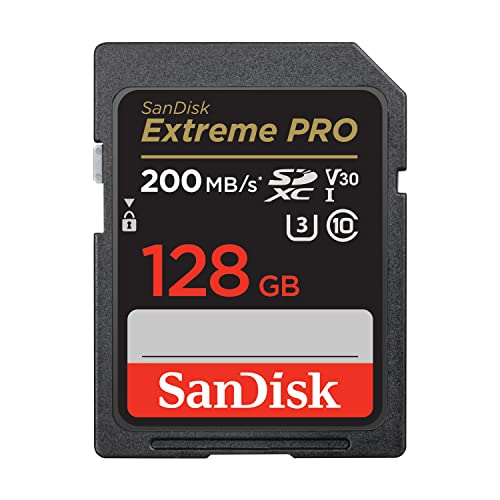
The best SD card for most cameras in 2026 is a SanDisk Extreme PRO UHS-I V30 if your camera is a UHS-I model, and a UHS-II V90 card such as the SanDisk Extreme PRO UHS-II, Lexar Professional 2000x or Kingston Canvas React Plus if your camera has a UHS-II slot and shoots high-bitrate 4K, 6K or 8K video. The key is to match the card to the slot and the video codec, because buying a faster card than your body can use wastes money and buying a slower one can stop a recording midway. This guide sorts the main options by camera type and gives the numbers needed to size a card.
Our top picks


As an Amazon Associate we earn from qualifying purchases at no extra cost to you.
Quick comparison of recommended SD cards
| Card | Best for | Bus and class | Rated read / write | Capacities | Price tier |
|---|---|---|---|---|---|
| SanDisk Extreme PRO UHS-I | Most DSLRs and entry mirrorless | UHS-I, U3, V30 | Up to about 200 / 140 MB/s | 64GB to 1TB | Mid-range |
| SanDisk Extreme PRO UHS-II | Pro stills and 4K video | UHS-II, V90 | Up to about 300 / 260 MB/s | 64GB to 512GB | Upper-mid to premium |
| Lexar Professional 2000x UHS-II | Value V90 option | UHS-II, V90 | Up to about 300 / 260 MB/s | 64GB to 256GB | Mid to upper-mid |
| Kingston Canvas React Plus | Burst shooting and video on a budget | UHS-II, V90 | Up to about 300 / 260 MB/s | 32GB to 256GB | Mid-range |
| ProGrade Digital SD UHS-II V90 | Consistent sustained writes | UHS-II, V90 | Up to about 250 to 300 MB/s | 64GB to 512GB | Premium |
| Kingston Canvas Go! Plus | Budget stills and 1080p | UHS-I, U3, V30 | Up to about 170 / 90 MB/s | 64GB to 512GB | Budget |
| SanDisk Extreme PRO microSD | Drones and action cameras | UHS-I, A2, V30 | Up to about 200 / 140 MB/s | 64GB to 1TB | Mid-range |
Speeds come from manufacturer spec sheets and are maximum ratings. Sustained write speed, which is what protects video, is usually lower than the peak, so look at the video class (V30, V60, V90) rather than the headline number.
First, check your camera’s slot
The slot determines how fast any card can run. Look in the manual or the spec sheet for “UHS-I”, “UHS-II” or “SD Express”.
- UHS-I slot: tops out around 100 MB/s real-world and 104 MB/s in theory, regardless of card. A V30 card is plenty, and a UHS-II card works but runs at UHS-I speeds.
- UHS-II slot: uses the extra row of pins and reaches roughly 250 to 300 MB/s. Required for the highest bitrate modes and long RAW bursts.
- Dual-slot bodies: often put one UHS-II and one UHS-I slot in the same camera. Use the faster card for the primary slot.
Best overall for DSLRs: SanDisk Extreme PRO UHS-I V30
This card remains the standard recommendation for older DSLRs and first-generation mirrorless cameras. It writes fast enough for 4K video at up to 100 Mbps and clears RAW bursts quickly, and SanDisk backs it with a lifetime limited warranty in many regions per its product page.
Main trade-off: on a UHS-II camera it leaves performance on the table, and it is not suitable for the highest-bitrate all-intra codecs.
Best for professional video: SanDisk Extreme PRO UHS-II V90
V90 means a guaranteed minimum sustained write speed of 90 MB/s, which covers 4K at 10-bit all-intra codecs and many 6K recording modes. The UHS-II interface speeds up RAW burst clearing and offloading to a card reader.
Main trade-off: it costs more, and you need a UHS-II card reader to see the benefit when copying files.
Best value V90: Lexar Professional 2000x and Kingston Canvas React Plus
Both cards offer V90 performance and roughly 300 MB/s read speeds at a lower cost than premium options. They suit enthusiasts who shoot lots of bursts or higher-bitrate video but do not need an extended professional warranty. Check the compatibility list for your camera model when it exists, as some bodies are fussy about particular brands.
Main trade-off: sustained speeds can be a bit less consistent in extreme conditions than ProGrade’s cards, and capacities are narrower.
Best for consistency: ProGrade Digital
ProGrade Digital builds its cards for professionals and tends to publish minimum sustained speeds, which suits video shooters who cannot risk dropped frames. The company also offers card readers that match.
Main trade-off: premium pricing and a shorter retail footprint than SanDisk or Lexar.
Best budget: Kingston Canvas Go! Plus
A V30 card at a friendly cost, ideal for stills, 1080p video and casual 4K at moderate bitrates. It suits family cameras and travel compacts where speed is not the main concern.
Main trade-off: slower writes than the premium options, so it is not for high-bitrate RAW video.
Best for drones and action cameras: microSD with A2 and V30
Drones, GoPro-style cameras and handheld gimbals use microSD cards. Choose U3, V30 and ideally A2, such as the SanDisk Extreme PRO microSD. Check the manufacturer’s recommended card list, because some cameras refuse unsupported cards or overheat on cheap ones.
Worked example: how much card do you need?
Storage need comes from the bitrate. A rule of thumb is bitrate in megabits per second divided by eight, multiplied by 60 seconds, gives megabytes per minute.
- 4K video at 100 Mbps: 100 / 8 x 60 = 750 MB per minute, or about 45GB per hour.
- 4K video at 400 Mbps (all-intra): 400 / 8 x 60 = 3,000 MB per minute, or about 180GB per hour.
- 45-megapixel RAW stills at about 50MB each: a 128GB card holds roughly 2,500 images.
A wedding videographer shooting two hours of 400 Mbps footage therefore needs around 360GB per camera, which fits on two 256GB V90 cards, plus spares. A hobbyist shooting 100 Mbps video on holiday gets about 2.8 hours from a 128GB card.
How to choose in four steps
- Identify the slot (UHS-I, UHS-II or microSD) from the camera spec sheet.
- Find the highest video bitrate you will use and pick V30 for up to about 240 Mbps, V60 for up to 480 Mbps, and V90 above that.
- Decide capacity with the bitrate math above.
- Buy two or more smaller cards instead of one huge card for important shoots, so a single failure does not take the whole day.
Ownership realities
- Format in the camera. Reformatting in the body ensures the correct file system and cluster size.
- Fake cards exist. Buy from authorized retailers and verify capacity on arrival.
- Cards wear. Write endurance is finite. Retire cards used heavily for years before an important shoot.
- Back up before you format. Copy to two locations before wiping a card.
- If files vanish, stop shooting. Recovery software works best when the card has not been written to again.
Frequently Asked Questions
Do I need a V90 card for 4K video?
Not always. Many cameras record 4K at 100 Mbps or less, and V30 is enough. V90 matters for high-bitrate all-intra or RAW video modes, so check your camera’s recommended card class.
Can I use a UHS-II card in a UHS-I camera?
Yes. UHS-II cards are backward compatible, but they run at UHS-I speeds in that slot. You gain faster transfers only when you use a UHS-II card reader.
Is SDXC the same as UHS-II?
No. SDXC describes capacity from 64GB to 2TB, while UHS-I and UHS-II describe the bus speed. A card can be SDXC and either UHS version.
What size SD card should I buy?
For stills, 64GB to 128GB suits most shooters. For video, 128GB to 256GB is more practical. Use your camera’s bitrate to estimate hours, as shown above.
Should I buy several small cards or one large one?
Several smaller cards spread the risk and let you hand off finished cards for backup. One large card is convenient for travel but puts all your footage in one place.







Write Your Review
No reviews yet. Be the first to share your experience!