
Our Short List of 3
All 5 Picks at a Glance
| Product | Specs | Action |
|---|---|---|
 CyberPower CP1500PFCLCD PFC Sinewave UPS | Check price on Amazon | |
 APC Back-UPS Pro BR1500MS2 Sinewave UPS | Check price on Amazon | |
 CyberPower CP1000PFCLCD PFC Sinewave UPS | Check price on Amazon | |
 GoldenMate 1000VA/800W Lithium UPS | Check price on Amazon | |
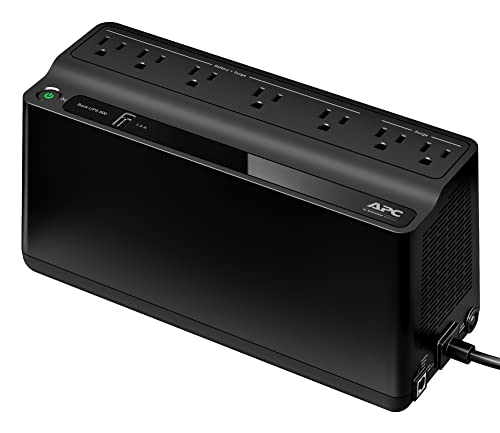 APC Back-UPS BE600M1 | Check price on Amazon |
Key takeaways
- Compare the best UPS units for gaming PCs, protecting saves and hardware from outages. Find a unit with the runtime and outlets your rig needs.
A gaming PC draws a lot of power, and a sudden outage can end a session in the worst way. Unsaved progress can be lost, a download can be interrupted, and a drive that is writing data when the power drops can end up with damaged files. A battery backup, usually called a UPS, sits between the wall outlet and the computer and keeps power flowing for a short time after the mains supply fails. That window is usually long enough to save progress and shut the computer down in an orderly way.
As an Amazon Associate, we earn from qualifying purchases.
Quick answer
For most gaming rigs, the CyberPower CP1500PFCLCD PFC Sinewave UPS is the strongest starting point, because its 1500VA and 1000W capacity covers a powerful PC and monitor, and its sine wave output suits modern power supplies. A smaller rig can save space with the CyberPower CP1000PFCLCD PFC Sinewave UPS, while the GoldenMate 1000VA/800W Lithium UPS offers a lighter lithium battery design.
CyberPower CP1500PFCLCD PFC Sinewave UPS
The CyberPower CP1500PFCLCD PFC Sinewave UPS is the largest unit in this group, rated at 1500VA and 1000W, and it is the natural first choice for a gaming rig with a high-wattage graphics card, a large monitor, and a few accessories. Its sine wave output suits modern PC power supplies, which mostly use active power factor correction. When the mains supply fails, the unit switches to battery power and gives time to save a game and shut down properly.
The unit uses a line-interactive design with automatic voltage regulation, which corrects minor sags and surges in the incoming supply without switching to battery power. A colour LCD panel on the front shows load level, battery charge, and estimated runtime. The mini-tower case carries battery-backed outlets plus surge-only outlets, along with USB charging ports. Its lead-acid batteries are user replaceable, and the maker covers the unit with a three-year warranty. The main drawback is size and weight: a lead-acid unit of this capacity is heavy and needs ventilated floor space. It remains the most capable pick here for a rig that must stay up through a short outage.
APC Back-UPS Pro BR1500MS2 Sinewave UPS
The APC Back-UPS Pro BR1500MS2 Sinewave UPS is rated at 1500VA and 900W, putting it close to the CyberPower 1500VA unit on capacity while offering a different mix of features. Its sine wave output also suits modern power supplies with active power factor correction. The tower case holds ten outlets, with battery-backed outlets for the PC and monitor and surge-only outlets for accessories.
A front LCD shows load, battery status, and estimated runtime, and the unit includes USB Type-A and USB Type-C charging ports for a phone, headset, or controller. Automatic voltage regulation smooths out minor fluctuations in the mains supply without draining the battery, and the battery cartridge is user replaceable. The maker backs it with a three-year warranty. Its 900W ceiling sits below the 1000W rating of the leading CyberPower unit, so a very high-wattage rig leaves less headroom here. It is also a substantial tower that needs floor space and airflow. For a strong gaming setup that does not sit at the very top of the power range, it is a well-rounded alternative with a clear display and useful charging ports.
CyberPower CP1000PFCLCD PFC Sinewave UPS
The CyberPower CP1000PFCLCD PFC Sinewave UPS is rated at 1000VA and 600W, and it is the sensible middle step for a mid-range gaming rig that does not need the largest battery in this group. It shares the sine wave output of its bigger sibling, so it works with modern power supplies that use active power factor correction. Automatic voltage regulation handles small sags and surges without switching to battery. A colour LCD shows load and battery information, and the mini-tower case carries ten outlets, split between battery-backed and surge-only outlets, plus USB charging ports.
For a PC with a mid-range graphics card, a single monitor, and a router, this unit gives enough time to save a game and shut down cleanly. Its smaller capacity also means a smaller, lighter case than the 1500VA model, which fits more easily under a desk. The lead-acid battery is user replaceable, and the maker provides a three-year warranty. The clear limit is capacity: a high-end rig with a power-hungry graphics card and a large monitor can push close to the 600W ceiling, leaving little margin. That kind of setup should step up to a 1500VA unit instead. For a balanced mid-range build, it covers the essentials without the bulk of a larger battery.
GoldenMate 1000VA/800W Lithium UPS
The GoldenMate 1000VA/800W Lithium UPS takes a different approach from the lead-acid units in this group, using a lithium iron phosphate battery instead of sealed lead-acid cells. It is rated at 1000VA and 800W, which gives it more wattage headroom than the CyberPower 1000VA unit, and its lithium battery is lighter than a lead-acid battery of similar capacity. The maker describes the battery as rated for thousands of charge cycles, pointing to a longer service life before a replacement is needed. Pure sine wave output suits modern PC power supplies, and the unit carries eight outlets for the PC, monitor, and network gear.
An LCD on the front shows input and output voltage, load, and battery level. It also supports automatic shutdown through a USB connection, closing down a connected computer or network storage device safely when nobody is at the desk. The white case is compact and easier to move than a lead-acid tower. The main caution is that GoldenMate is a newer and less established name than APC or CyberPower, so buyers should check the manual for supported devices and confirm the shutdown software works with their operating system. For a gamer who wants a lighter unit with strong wattage for its size, it is an interesting alternative to lead-acid designs.
APC Back-UPS BE600M1
The APC Back-UPS BE600M1 is the smallest unit in this group, rated at 600VA and 330W. Its compact tower can stand on a desk or mount on a wall, and it carries seven outlets, with battery-backed outlets for essential gear and surge-only outlets for the rest. For a router, modem, and small monitor, or a modest desktop that needs a few minutes to save work and shut down, it gives a useful safety net at a size larger units cannot match.
The limits need to be stated plainly. A 330W ceiling is far below what a gaming PC with a dedicated graphics card draws under load, so this unit cannot carry a serious gaming rig on its own. Its battery output is a stepped approximation of a sine wave rather than a pure sine wave, which some power supplies with active power factor correction do not accept happily, and it has no automatic voltage regulation. As a backup for network gear beside a gaming desk, or as the sole protection for a low-power setup, it earns its place. As the only protection for a high-wattage rig, it would be overloaded, and the PC would shut down anyway. Treat it as a companion unit, not as the main defence for a powerful gaming PC.
How to choose
Start with power draw, because capacity matters most. Add up the wattage of the PC, monitor, and any other device that must stay on during an outage, then choose a UPS whose watt rating sits comfortably above that total. Sine wave output is next, since modern power supplies with active power factor correction expect a clean sine wave. Count the outlets as well, and separate devices that need battery power from those that only need surge protection. Automatic voltage regulation is worth having in areas with frequent brownouts, since it corrects small fluctuations without using the battery. Finally, check whether the battery can be replaced, and measure the space beside the desk, because a large lead-acid tower needs floor space and ventilation.
Who should skip
A UPS is not the right purchase for every setup. A laptop gamer can skip one entirely, because the laptop battery already covers a short outage. A desktop owner in an area with a very stable supply who never loses power may also decide that a good surge protector is enough. Skip the small APC Back-UPS BE600M1 with a high-wattage gaming rig, since its 330W ceiling cannot carry that load. The larger 1500VA units should be skipped by anyone with no floor space or ventilation around the desk, because a heavy tower in a closed cabinet will run hot and be hard to reach. A buyer who only wants to protect a router and modem should also skip the big units and pick the compact model instead.
FAQ
How long will a UPS keep a gaming PC running?
Runtime depends on the load, so there is no single number that fits every rig. A light load gets a longer runtime, while a powerful graphics card under full load drains the battery quickly. In practice, most gaming setups get enough time to save a game and shut down cleanly, which is the real purpose of a UPS. It is a bridge to a safe shutdown, not a way to keep playing through a long outage.
Do I need a sine wave UPS for a gaming PC?
Most modern gaming PCs use power supplies with active power factor correction, and those supplies are designed for a sine wave input. A pure sine wave UPS matches that expectation and avoids the compatibility problems a stepped output can cause. A stepped output may work with older supplies, but the safe choice for a current gaming rig is a sine wave unit.
What size UPS do I need for my gaming PC?
Add the wattage of the PC, monitor, and any other device that must stay on, then pick a UPS rated above that total with room to spare. A mid-range rig with one monitor often fits a 1000VA unit, while a high-end rig with a powerful graphics card and a large monitor usually needs a 1500VA unit. Leave headroom for future upgrades.
How often should I replace a UPS battery?
A sealed lead-acid battery in a UPS usually lasts three to five years, depending on how often it is used and how warm the room is. The unit will usually warn when the battery is wearing out, and the battery should be replaced promptly when that warning appears. Lithium batteries last longer, but they still wear out eventually, so keep the unit in a cool, ventilated spot.
Final verdict
The CyberPower CP1500PFCLCD PFC Sinewave UPS is the best starting point for most gaming rigs, because its 1500VA and 1000W capacity, sine wave output, and automatic voltage regulation cover a powerful PC and monitor. The APC Back-UPS Pro BR1500MS2 Sinewave UPS is a strong alternative with useful USB charging ports, although its 900W ceiling leaves slightly less headroom. A mid-range rig fits the CyberPower CP1000PFCLCD PFC Sinewave UPS, while the GoldenMate 1000VA/800W Lithium UPS offers a lighter lithium design. The APC Back-UPS BE600M1 belongs beside the desk as protection for a router and modem, not as the main backup for a gaming PC.
Product and ASIN Reference
| Product | ASIN |
|---|---|
| CyberPower CP1500PFCLCD PFC Sinewave UPS | B00429N19W |
| APC Back-UPS Pro BR1500MS2 Sinewave UPS | B08GRY1W93 |
| CyberPower CP1000PFCLCD PFC Sinewave UPS | B00429N192 |
| GoldenMate 1000VA/800W Lithium UPS | B0DTYHCVF6 |
| APC Back-UPS BE600M1 | B01FWAZEIU |
More from Amazon
Programs that pair well with the guide above. Offers and eligibility are set by Amazon and may change.
A free business account with business pricing and bulk-buying tools for work, shop or home office.
Create a business accountFree shipping on eligible items, Prime Video and more. Eligible new members can start with a free trial.
Start a Prime free trialAudiobooks and podcasts to listen to on the go. Eligible new members can start with a free trial.
Try Audible freeAd-free music streaming. Eligible new subscribers can start with a free trial.
Try Music Unlimited freeAs an Amazon Associate we earn from qualifying purchases.




Write Your Review
No reviews yet. Be the first to share your experience!