

The best UHS-II SD card for most photographers and videographers in 2026 is the SanDisk Extreme PRO V90, which is rated at 300MB/s read and 260MB/s write, with the Kingston Canvas React Plus V90 as the best-value alternative and the Sony SF-G Tough as the pick when durability matters most. UHS-II only pays off if both your camera and your card reader support it, because on a UHS-I slot every one of these cards drops to roughly 90MB/s.
The UHS-II bus adds a second row of pins that lets a card move data at up to about 312MB/s, against about 104MB/s for UHS-I. That headroom matters for long bursts of RAW files, 4K and 6K video at high bitrates, and fast card offloading. This guide compares seven real, current UHS-II cards by rated speed, sustained write guarantee, build quality and warranty, and then shows how to size a card for your own camera.
Our top picks


As an Amazon Associate we earn from qualifying purchases at no extra cost to you.
Quick Comparison of the Seven UHS-II Cards
| Card | Best for | Rated read / write | Video speed class | Standout feature |
|---|---|---|---|---|
| SanDisk Extreme PRO UHS-II | Best overall | 300 / 260 MB/s | V90 | Lifetime limited warranty, IP68 |
| Kingston Canvas React Plus | Best value V90 | 300 / 260 MB/s | V90 | Strong real-world write speed |
| Lexar Professional 2000x GOLD | Established mid-range V90 | 300 / 260 MB/s | V90 | Physical write-protect switch |
| ProGrade Digital SDXC UHS-II V90 | Pro workflows, consistency | 300 / 250 MB/s | V90 | Photographer-focused brand |
| Sony SF-G Tough | Harsh conditions | 300 / 299 MB/s | V90 | One-piece molded body, IP68 |
| Angelbird AV PRO SD MK2 | Sustained video recording | 300 / 280 MB/s (sustained 280 / 260) | V90 | Capacities up to 1TB |
| Delkin Devices BLACK UHS-II | Rugged use, strong warranty | 300 / 250 MB/s | V90 | Lifetime warranty plus 48-hour replacement |
Price tiers: Kingston and Lexar sit in the mid-range, SanDisk, ProGrade and Delkin in the upper mid-range, and Sony and Angelbird in the premium tier. Rated speeds are manufacturer maximums, and independent benchmarks typically land somewhat below them, as explained further down.
Best Overall: SanDisk Extreme PRO UHS-II (V90)
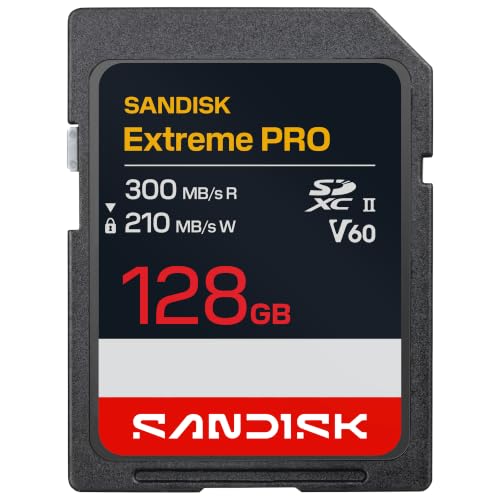
SanDisk’s Extreme PRO SDXC UHS-II card carries a rating of up to 300MB/s read and 260MB/s write on SanDisk’s product page, with a V90 class that guarantees at least 90MB/s sustained write. The V90 range covers 64GB, 128GB, 256GB and 512GB SDXC versions, while the 32GB size is SDHC. SanDisk describes IP68 water and dust resistance, a 6 meter drop rating and a working temperature range of minus 25 to 85 degrees Celsius, and the card is covered by a lifetime limited warranty.
Check the SKU when you buy. Some newer V90 listings advertise higher write figures than the 260MB/s in the older spec table, so look at the printed numbers on the packaging. Independent benchmarks published in 2026 reported write speeds from about 283MB/s on the older version to just over 300MB/s on a later revision, which suggests the newer part is quicker in real use.
Who it is for: shooters who want a safe default that works in nearly every camera, with wide availability and simple replacement.
Pros: excellent sustained write, wide capacity range, durable construction, lifetime limited warranty.
Cons: costs more than the Kingston and Lexar equivalents, and full speed needs a UHS-II reader, ideally SanDisk’s own.
Best Value V90: Kingston Canvas React Plus
The Canvas React Plus is Kingston’s UHS-II line, rated at 300MB/s read and 260MB/s write with a V90 class. Listed capacities are 32GB, 64GB, 128GB and 256GB. Independent measurements reported by reviewers show real read speeds near 290MB/s and write speeds around 274MB/s, which means it can reach or beat its rating on the write side. For stills shooters who fill a buffer and wait for it to clear, that is the number that decides how soon you can shoot again.
Who it is for: enthusiasts and hybrid shooters who want V90 behavior without the brand premium.
Pros: strong write performance for its tier, V90 guarantee, sensible capacities.
Cons: no 512GB size in the line, and fewer ruggedness claims than Sony or Delkin.
Best Established Mid-Range: Lexar Professional 2000x GOLD
Lexar’s Professional 2000x GOLD series is a UHS-II V90 card with a claimed 300MB/s read and 260MB/s write, a minimum sustained write of 90MB/s and a physical write-protect switch. A published review of the 256GB model measured about 278MB/s read and 241MB/s write, a few percent under its claim, which is typical and still comfortably above the V90 floor. Lexar’s capacity range covers the common sizes, and the card is widely stocked.
Who it is for: photographers who want a familiar brand, a standard lockable case and a mid-range tier.
Pros: write-protect switch for safe archiving, solid V90 rating, broad availability.
Cons: the lowest measured write speed in this group, and the switch is a weak point on very rough use.
Best for Pro Workflows: ProGrade Digital SDXC UHS-II V90
ProGrade Digital was formed by veterans of the memory card business and sells mainly to working photographers. Its V90 SD card is rated at 300MB/s read and 250MB/s write. Published measurements put real write around 254MB/s and read near 283MB/s, so the card meets or slightly exceeds its stated write speed. ProGrade has also introduced a newer Iridium V90 line with a stated maximum write of 275MB/s, and its Gold V60 card is rated lower at roughly 250MB/s read and 100MB/s write, which suits 4K video at moderate bitrates and stills work.
Who it is for: pros who value consistency and a brand that publishes honest ratings, and who also shoot CFexpress and want one vendor for both.
Pros: write speed that meets its rating, strong reputation among working photographers, V60 and V90 options.
Cons: rated write is lower than SanDisk and Kingston, and prices are in the upper mid-range.
Best for Harsh Conditions: Sony SF-G Tough
Sony’s SF-G Tough series is built around a one-piece molded body with no separate write-protect switch and no open ribs between the contacts, which are the usual failure points on a standard SD card. Sony specifies up to 300MB/s read and up to 299MB/s write, V90, UHS-II, with a UHS-I fallback near 95MB/s read and 90MB/s write. Retailer spec sheets list IP68 dust and water resistance, drop survival from 16 feet, a bend resistance 18 times higher than the SD standard and an operating range of minus 25 to 85 degrees Celsius. Capacities are 64GB, 128GB and 256GB.
Who it is for: outdoor, wildlife, adventure and event shooters whose cards get dropped, wet or dusty.
Pros: the highest write rating in the group, truly rugged body, consistent performance.
Cons: premium tier, no 512GB size, and no write-protect switch for quick lock-out.
Best for Sustained Video: Angelbird AV PRO SD MK2 V90
Angelbird publishes two sets of numbers for the AV PRO SD MK2: maximum 300MB/s read and 280MB/s write, and sustained 280MB/s read and 260MB/s write, with a 90MB/s minimum write for V90. The sustained figure is the one that matters for long takes, and few cards publish it. Capacities run from 64GB to 1TB, so it is one of the few UHS-II SD cards for shooters who want to avoid card swaps. Angelbird lists protection against water, shock, X-rays and magnets, a temperature range of minus 25 to 85 degrees Celsius, ECC and wear-leveling, a write-protect switch and a limited warranty.
Who it is for: videographers on cameras that record to SD at high bitrates, and anyone who wants a very large SD capacity.
Pros: published sustained speeds, capacities up to 1TB, good protection.
Cons: premium tier and less common in physical stores.
Best Warranty for Rugged Use: Delkin Devices BLACK UHS-II (V90)
Delkin’s BLACK V90 card is rated at 300MB/s read and 250MB/s write with a 90MB/s minimum sustained write. Delkin says the card is three times stronger than a regular SD card and withstands more than 45 pounds of impact, and that it is waterproof, dustproof, shockproof and X-ray proof across a range from minus 25 to 85 degrees Celsius. There is no write-protect switch and no plastic ribs. Capacities run from 64GB to 512GB. The cards come with a lifetime warranty and a 48-hour replacement guarantee once you register the card with Delkin.
Who it is for: shooters who want the strongest replacement promise and a tough card for travel and fieldwork.
Pros: registered lifetime warranty with quick replacement, rugged design, 512GB size.
Cons: the warranty requires registration, and write speed is below SanDisk, Kingston and Sony ratings.
How to Choose: Decision Matrix
| Your situation | Best choice | Reason |
|---|---|---|
| One safe default for stills and video | SanDisk Extreme PRO | Balanced speed, warranty and availability |
| Limited budget but want V90 | Kingston Canvas React Plus | Real write near rating at a mid-range tier |
| Shoot in rain, dust or on trips | Sony SF-G Tough or Delkin BLACK | Sealed or reinforced bodies, no weak ribs |
| Long video takes or very large capacity | Angelbird AV PRO SD MK2 | Published sustained speeds, up to 1TB |
| Need a lockable card for archiving | Lexar GOLD or ProGrade | Write-protect switch on the card |
| 4K video at moderate bitrates only | ProGrade Gold V60 | V60 is enough and cheaper than V90 |
Worked Example 1: Burst Buffer and Clear Time
Take a camera that shoots 50MB RAW files at 20 frames per second, a data rate of 1,000MB/s, with an internal buffer of 100 frames. A card that writes 260MB/s drains the buffer at about 5.2 frames per second. During a burst the buffer fills at 20 minus 5.2, or 14.8 frames per second, so it is full after about 6.8 seconds, which is roughly 135 frames including those written meanwhile. After you release the shutter, the remaining 100 buffered frames clear in about 19 seconds. A slower card writing 100MB/s drains only 2 frames per second, fills the buffer in about 5.6 seconds, and needs about 50 seconds to clear. In practice, a faster card gives you 2.5 times quicker recovery between bursts.
Worked Example 2: Video Recording Time per Card
Capacity divided by bitrate tells you how long a card lasts. A 4K 10-bit All-Intra clip at 600Mbps is 75MB/s. A 256GB card holds about 256,000 divided by 75, or roughly 3,400 seconds, which is about 57 minutes. A 512GB card holds double that, about 1 hour 54 minutes. The same bitrate needs a minimum write of 75MB/s, so a V90 card has comfortable margin, while a V60 card sits just above the limit and any slowdown can interrupt recording. Always keep sustained write at least 20 percent above your camera’s highest bitrate.
Rated Speed Versus Real Speed
Every figure above is a manufacturer maximum, measured by the maker with its own reader and a clean card. Independent benchmarks in 2026 showed that write speeds usually land at 90 to 105 percent of the rating, with the older SanDisk and Lexar parts a little below and the ProGrade and the newer SanDisk at or above. Reads in practice reach 275 to 295MB/s. Four factors cause the gap: the reader, the host controller, how full the card is and the file size, because lots of small files write more slowly than one large file.
The V90 class is the number that gives a real guarantee. It promises at least 90MB/s of sustained write, enough for most 8K and high-bitrate 4K formats, no matter how the burst speeds behave.
Compatibility Checks Before You Buy
- Camera slot: look for a UHS-II logo or two rows of pins in the manual. Many entry-level cameras have UHS-I slots, and on those a UHS-II card runs at UHS-I speeds, about 95MB/s read and 90MB/s write for the Sony card.
- Dual slot cameras: in many bodies only one slot is UHS-II. Put the faster card in that slot and use the other for backup or overflow.
- Card reader: a UHS-I reader slows a UHS-II card to a crawl. Use a UHS-II reader and a USB 3.2 port.
- Capacity format: SDHC covers up to 32GB and SDXC up to 2TB. Older cameras that only know SDHC cannot read SDXC cards.
- SD Express: a different, newer standard that uses a PCIe interface. It is not the same as UHS-II and needs a camera that supports it.
Match the Card to the Kind of Shooting You Do
Sports and wildlife: long bursts reward the highest write speed and a fast buffer clear, so the SanDisk Extreme PRO, Kingston Canvas React Plus and Sony SF-G Tough are the sensible picks. A rugged body matters because these cards change hands in the field.
Weddings and events: reliability beats speed. Two slots with matching cards, a write-protect switch on finished cards and a brand with fast warranty replacement, such as Delkin or SanDisk, reduce risk. Shoot to two cards at once whenever the camera allows.
Landscape and travel: burst speed is secondary, so capacity and durability lead. A 128GB or 256GB card in a weatherproof case covers a day of RAW files, and Sony or Delkin cards handle sand, rain and cold.
Video and hybrid work: pick by sustained write and capacity. Angelbird’s published sustained numbers and large sizes suit long interviews, while any V90 card handles typical 4K at high bitrates. Format the card in the camera before every shoot, and carry a spare of equal speed class.
Drone and action cameras: most of these use microSD rather than full-size SD, so the cards in this guide fit only if you use an adapter and the device has a UHS-II compatible slot, which is rare. Check the manual first.
Care and Common Mistakes
- Format in the camera rather than on a computer, so the file system matches what the camera expects.
- Do not remove a card during writing. Wait for the access light to go out.
- Copy, verify, then erase. Do not delete files from the card until the backup is confirmed.
- Keep contacts clean and store cards in a hard case, away from heat and moisture.
- Avoid unbranded sellers. Counterfeit cards report false capacity or write slowly. Buy from authorized retailers and check the printed model number.
- Rotate cards. Heavy shooters should retire cards after a few years, since flash wear is cumulative.
Frequently Asked Questions
Is a UHS-II card worth it over UHS-I?
Yes if your camera has a UHS-II slot and you shoot bursts or high-bitrate video, because write speed can be two to three times higher. If your camera is UHS-I only, the extra spend buys nothing and a good UHS-I card is the better choice.
What does V90 mean on an SD card?
V90 is a video speed class that guarantees a minimum sustained write speed of 90MB/s. It is the standard that tells you whether a card can keep up with demanding 4K and 8K recording, regardless of its peak burst speed.
Will a UHS-II card work in an older camera?
It will, because UHS-II cards are backward compatible with UHS-I and standard SD slots. The card runs at the slower speed of the slot, so you lose the speed advantage but not the function.
Do I need a special reader for UHS-II cards?
Yes. A UHS-II reader with a USB 3.0 or faster connection is required to reach full speed. A basic reader or the slot in a laptop may cap the card at UHS-I speed.
V60 or V90, which should I buy?
Buy V90 for high-bitrate video, long bursts of RAW stills and cameras that record 6K or 8K. V60 is enough for most 4K video up to about 400Mbps and for typical photography. Compare the bitrate of your camera’s top mode with the card’s minimum write speed and leave at least 20 percent margin.
How long do SD cards last?
Flash cards wear with each write cycle, though a quality card usually lasts many years of normal use. Warranties from SanDisk, Delkin and others reflect that confidence. Replace cards that show errors, slow writes or physical damage, and keep two copies of important shoots.








Write Your Review
No reviews yet. Be the first to share your experience!