
Key takeaways
- Protect NAS units and hard drives from brownouts, overvoltage and surges with the best voltage regulators and power conditioners for home storage setups.
A hard drive can survive a clean shutdown. What it struggles with is dirty power: the brownout that dips voltage while a NAS is mid-write, or the sustained overvoltage that quietly stresses every power supply in the cabinet. A surge protector only reacts to brief spikes, and a UPS only steps in when power fails outright. Voltage regulators and power conditioners fill the gap in between, correcting or filtering the power your storage gear runs on every hour of the day. This guide compares five units across the three protection styles, with the two true regulators first.
As an Amazon Associate, we earn from qualifying purchases.
Quick answer
For most home storage setups, a true automatic voltage regulator is the right buy: the APC Line-R LE1200 and Tripp Lite LC1200 actively correct brownouts and overvoltage. Rack owners who mainly need filtering and a hard safety cutoff should look at the Furman PL-8C, while the Panamax MR4300 and Furman M-8X2 cover filtering-first roles.
APC Line-R 1200VA Automatic Voltage Regulator (LE1200)
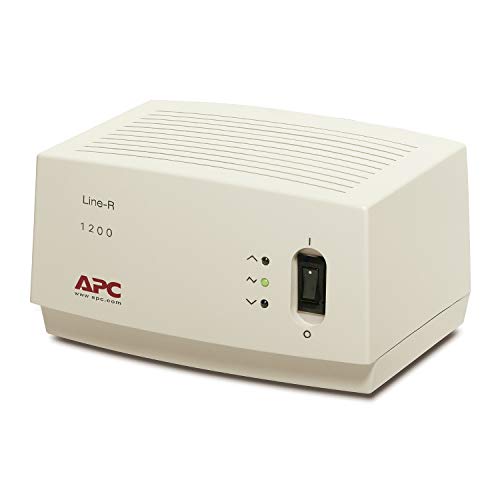
The APC Line-R LE1200 is the classic desktop answer to unstable mains power, and it is a true regulator rather than a dressed-up surge strip. Its automatic voltage regulation circuitry boosts low voltage and steps down high voltage so connected equipment keeps seeing a steady 120 volts, which is exactly the protection a NAS or external drive needs during a brownout. APC rates the unit at 1200 VA and 1200 watts of output capacity, with a maximum input current of 10 amps. With the input selector set to 120 volts, the manual specification table gives an acceptable input range of 85 to 140 volts, wide enough to ride through most sags and swells without dropping the load. Four NEMA 5-15R outlets cover a NAS, a router, a switch and a backup drive, and a 6.5 foot cord helps with placement. Surge suppression is rated at 680 joules, and front panel LEDs report whether the incoming voltage is high, normal or low. A resettable circuit breaker handles overloads. The Line-R carries no battery, so it cannot bridge an outage, and APC rates it for voltage-sensitive electronics rather than motor-driven appliances. For a small storage setup on a weak circuit, it is the straightforward pick.
Tripp Lite LC1200 Line Conditioner
The Tripp Lite LC1200 takes the same regulation-first approach in a slightly tougher package. It maintains a usable 120 volt output across an input range of 87 to 140 volts, boosting brownouts and trimming overvoltages automatically, so a NAS keeps running through the dips that make lesser protection gear simply pass the problem along. Continuous output is rated at 1200 watts across four NEMA 5-15R outlets. Surge suppression is rated at 1200 joules, and the unit filters EMI and RFI noise by up to 80 dB, which matters when drives share a circuit with noisy appliances. Seven diagnostic LEDs on the front panel show input voltage status and fault conditions at a glance, and the attached cord is 7 feet long. A resettable circuit breaker protects against overloads, and Tripp Lite backs the LC1200 with a two year limited warranty. Like the APC unit, it has no battery and no monitoring connection for NAS software, so it works silently in the background rather than reporting its status to the network. Choose it over the Line-R when the higher surge rating and stronger noise filtering matter, or when the four outlets will feed a small stack of storage and networking gear that runs around the clock.
Furman PL-8C Power Conditioner
The Furman PL-8C comes from the rackmount audio world, but its protection scheme suits a home server rack just as well. It is a 15 amp conditioner with nine outlets, eight on the rear panel and one on the front, plus pull-out rack lights for working inside a dark cabinet. Furman SMP surge protection clamps spikes at 188 volts peak, and its LiFT linear filtering technology targets the AC line noise that can ride into sensitive electronics. The key difference from the two regulators above is the EVS extreme voltage shutdown circuit: the PL-8C is specified for an operating voltage range of 90 to 139 volts, and when the incoming voltage leaves that window the unit disconnects the load instead of trying to correct it. That protects drives from sustained overvoltage, but a long brownout will shut the NAS down rather than keep it running, so pairing it with a UPS is the sensible setup. Other listed specifications include a maximum surge current of 6,500 amps and a 10 foot captive power cord in 14 AWG. Pick the PL-8C when your storage gear lives in a rack and clean, well-filtered power with a hard safety cutoff matters more than riding through sags.
Panamax MR4300 Power Management
The Panamax MR4300 is a home theater power manager that earns its place here because many NAS units live in the same cabinet as AV gear. It offers nine outlets, eight on the back and one on the front, on a 15 amp chassis. Its AVM automatic voltage monitoring watches the incoming line and disconnects connected equipment when the voltage moves outside the safe range, then reconnects once power returns to normal. That is protection by disconnection, the same philosophy as the Furman PL-8C, rather than active regulation. Panamax adds Level 3 noise filtration to clean up the power feeding everything in the cabinet. Unusually for this group, the MR4300 also protects the data lines running into the same equipment, with jacks for LAN, telephone and coaxial connections, so a surge arriving over a cable or network line meets protection too. The front panel outlet suits temporary gear such as a laptop or a charger. What it will not do is hold a NAS up through a brownout or an outage, so treat it as the cabinet-level layer in a setup that also includes a UPS. It suits readers whose storage shares a media cabinet and who want one unit watching power and signal lines together.
Furman M-8X2 Merit Series Power Conditioner
The Furman M-8X2 is the honest budget entry in this roundup, and its limits should be stated plainly: it does not regulate voltage and it does not disconnect the load during a brownout. What it does provide is filtered, surge-protected power distribution for a rack. Furman rates it at a 15 amp maximum output current across eight switched rear outlets, with a 6 foot captive cord in 14 AWG wire. Spike protection works line to neutral, with energy dissipation rated at 170 joules and a peak impulse current of 12,000 amps, and the unit filters RFI and EMI noise from the line. A front panel switch and circuit breaker round out the controls, and the outlet spacing accommodates bulky wall warts. That specification set makes it a sensible choice only where the incoming voltage is already stable and the goal is cleaner power plus basic surge defense for a small rack of drives and networking gear. If your circuit sags when large appliances start, skip this one and buy a true regulator from the top of this list instead. Included here because many home racks need exactly this layer, it earns its place as long as nobody mistakes it for voltage regulation.
How to choose
Start with the protection style, because the names overlap. A true automatic voltage regulator, like the APC LE1200 and Tripp Lite LC1200, actively boosts low voltage and trims high voltage so equipment keeps running. Conditioners with monitoring, like the Furman PL-8C and Panamax MR4300, filter noise and disconnect the load when voltage leaves a safe window. Basic conditioners only filter and clamp surges. Next, size the unit: add up the rated draw of your NAS, drives, router and switch, and stay comfortably under the continuous wattage rating. Count outlets and check the form factor, since rack units assume a cabinet. Compare surge ratings and noise filtering where listings state them. Finally, remember that none of these units has a battery, so pair one with a UPS if outages are also a concern. One safety note: the 2013 CPSC recall covered APC SurgeArrest 7 and 8 series surge protector strips made before 2003, a different line from the Line-R regulator in this guide, but worth checking if an old strip is still in your setup.
Who should skip
Skip this category entirely if your power is stable and your NAS already sits behind a good UPS with automatic voltage regulation built in, since many mid-range UPS units include a basic regulation stage of their own. Skip the filtering-only models if your circuit visibly sags when large appliances start, because they cannot correct low voltage. Skip regulators for motor-driven appliances such as refrigerators, freezers and power tools, which makers exclude from the intended loads. And skip any unit without a stated continuous wattage rating that covers your whole setup, since an undersized regulator becomes the weakest link in the chain.
Frequently asked questions
Does a voltage regulator replace a UPS?
No. A regulator corrects voltage while the power is on, but it stores no energy, so an outage still cuts power instantly. A UPS provides battery runtime and a controlled shutdown, yet many smaller UPS units offer only basic surge protection. Plenty of storage setups run both, with the regulator smoothing the incoming power and the UPS standing by for blackouts and shutdown signaling to the NAS.
Can a brownout actually damage a hard drive?
It can. Drives and NAS power supplies are built for a stated input range, and repeated operation below it strains components and can interrupt a write in progress, leaving corrupted data or a degraded array. Sustained overvoltage is worse, heating power supplies and shortening their life. Regulation keeps the supply inside its comfort zone, which is why it matters more for always-on storage than for a laptop with its own battery.
What is the difference between a voltage regulator and a power conditioner?
A regulator changes the voltage, boosting sags and trimming swells so the output stays near 120 volts. A conditioner leaves the voltage alone and instead filters electrical noise and clamps surges. Some conditioners add monitoring that disconnects equipment during extreme voltage, which protects hardware but stops it running. The two regulators in this guide do the first job; the other three picks do the second, with varying levels of protection.
How large a regulator does a home NAS need?
Add the rated power draw of everything you will plug in: the NAS itself, any expansion units, the router and the network switch. Then choose a regulator whose continuous wattage rating clears that total with room to spare for drive spin-up. A two or four bay NAS with networking gear usually lands well under the 1200 watt class covered here, while a large rack may need a 15 amp conditioner instead.
Final verdict
For a NAS or drive shelf on an unreliable circuit, buy a true regulator first: the APC Line-R LE1200 is the simple, proven choice, and the Tripp Lite LC1200 matches it with a higher surge rating and stronger noise filtering. Rack owners who value filtration and a hard cutoff over ride-through should take the Furman PL-8C. The Panamax MR4300 suits shared AV and storage cabinets, and the Furman M-8X2 covers basic filtered distribution where voltage is already stable. Whatever you choose, add a UPS if clean shutdowns matter.
Product and ASIN Reference
| Product | ASIN |
|---|---|
| APC Line-R 1200VA Automatic Voltage Regulator (LE1200) | B00009RA60 |
| Tripp Lite LC1200 Line Conditioner | B0000512LA |
| Furman PL-8C Power Conditioner | B001J1LG2U |
| Panamax MR4300 Power Management | B00ILH7KJI |
| Furman M-8X2 Merit Series Power Conditioner | B003BQ91Y6 |
More from Amazon
Programs that pair well with the guide above. Offers and eligibility are set by Amazon and may change.
A free business account with business pricing and bulk-buying tools for work, shop or home office.
Create a business accountFree shipping on eligible items, Prime Video and more. Eligible new members can start with a free trial.
Start a Prime free trialAudiobooks and podcasts to listen to on the go. Eligible new members can start with a free trial.
Try Audible freeAd-free music streaming. Eligible new subscribers can start with a free trial.
Try Music Unlimited freeAs an Amazon Associate we earn from qualifying purchases.




Write Your Review
No reviews yet. Be the first to share your experience!